 Skip to content
Choosing the right fire hose accessories in Saudi Arabia is not simply a matter of buying a hose and nozzle. A reliable firefighting setup depends on compatible components, correct water flow, suitable pressure, durable materials, and proper installation.
For commercial buildings, warehouses, industrial facilities, hospitals, hotels, residential developments, and other properties, even a small accessory can affect the performance of the wider fire protection system.
At Advanced Times Company, fire protection equipment is approached as part of an integrated safety solution rather than as isolated products. This makes equipment selection especially important when a project requires fire hydrant systems, hose reels, pumps, valves, nozzles, or related firefighting equipment.
What Are Fire Hose Accessories?
Fire hose accessories are the components used to connect, control, direct, and operate a firefighting hose system. Depending on the application, the equipment may include fire hose nozzles, couplings, adapters, branch pipes, valves, hose reel components, hydrant connections, and other hose appliances.
The correct combination depends on the design of the fire protection system and the requirements of the building.
For example, a warehouse may require a different hose and nozzle arrangement from a high-rise commercial building or an industrial facility. Water pressure, hose diameter, connection type, required flow, fire risk, installation location, and operating conditions all need to be considered before procurement.
That is why buying the cheapest individual accessory is not necessarily the most economical solution. A component that does not match the existing system can create installation problems, reduce operational performance, or require replacement later.
Essential Fire Hose Accessories for Saudi Projects
Fire Hose Nozzles
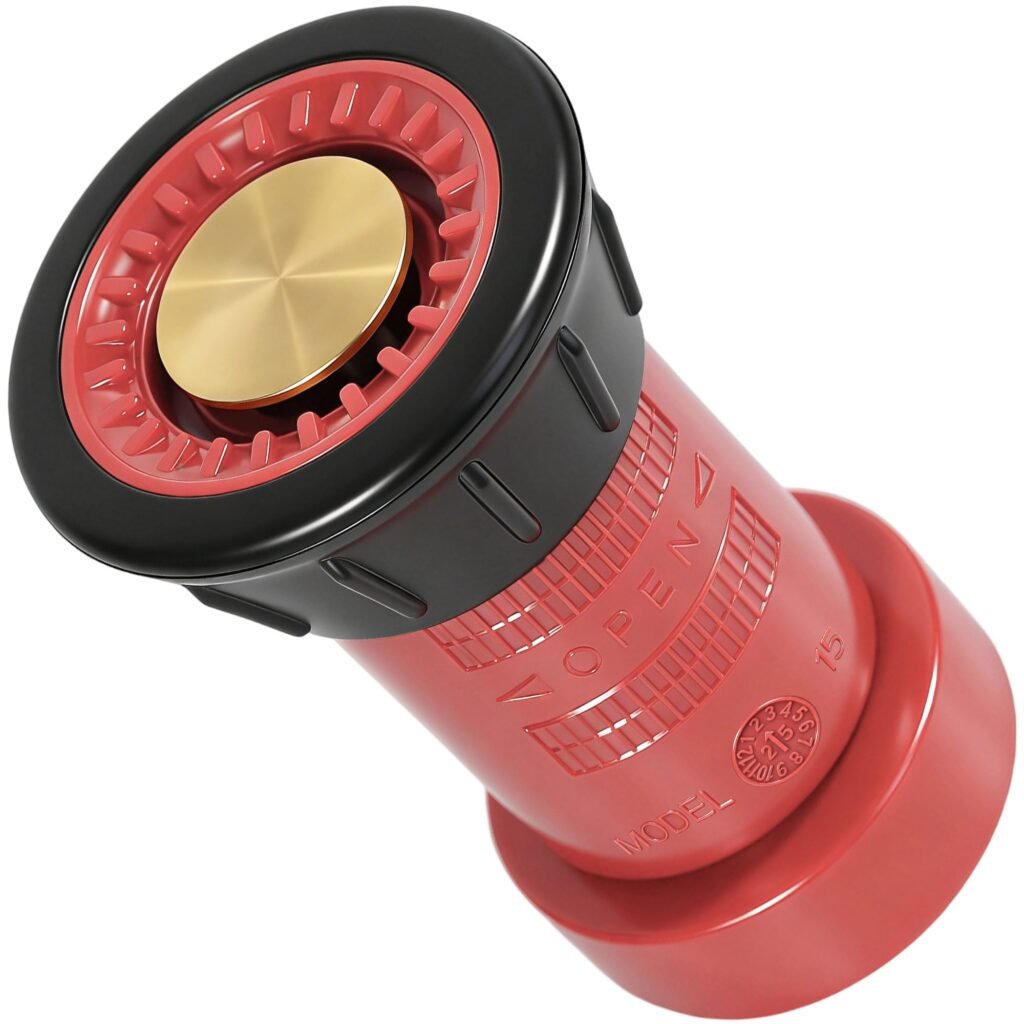
The nozzle is one of the most important components at the end of a firefighting hose. It controls and directs the water discharge, allowing the operator to apply water according to the emergency situation.
Common nozzle configurations include straight-stream, fog, adjustable, variable-flow, and high-pressure designs.
An adjustable fire nozzle can provide different spray patterns, while a straight-stream nozzle is useful when longer water projection and concentrated discharge are required. Fog patterns can be useful for cooling and creating a broader protective water pattern. The correct choice depends on the firefighting application, available pressure, required flow, hose connection, and project specification.
Fire Hose Couplings and Adapters
A hose is only useful when it can be securely connected to the rest of the firefighting system.
Couplings and adapters provide the connection between hoses, valves, hydrants, nozzles, hose reels, or other equipment. The connection must be compatible with the hose diameter, thread or coupling arrangement, and system configuration.
Before ordering a coupling, confirm the existing connection rather than relying on appearance alone.
Fire Hose Branch Pipes
A branch pipe provides controlled water discharge while giving the operator a practical way to handle the hose during firefighting operations. Branch pipes can be particularly useful where controlled directional water delivery is required. Material, connection size, operating pressure, and nozzle configuration should be matched to the intended application.
Valves and Hose Connections
Valves control water flow within the firefighting system. Depending on the system design, different valve types may be used around hydrants, hose reels, risers, pumps, and other components.
A valve should not be selected independently of the overall hydraulic design. Its size, pressure rating, connection type, installation location, and intended function should correspond with the project requirements.
How to Choose the Right Fire Hydrant Nozzle
Selecting a fire hydrant nozzle supplier in Saudi Arabia should start with technical requirements rather than price alone.
Consider these factors before purchasing. First, identify the application. A residential building, shopping mall, warehouse, petrochemical facility, hospital, and industrial plant can have very different firefighting requirements. Second, check water pressure and flow. A nozzle needs to work with the pressure and water supply available from the hydrant, pump, hose reel, standpipe, or other source.
Third, verify the connection size. Common firefighting nozzle configurations can include different connection sizes, so the nozzle must match the hose and coupling arrangement used on the project.
Fourth, select the appropriate spray pattern. Straight stream, fog, wide fog, or adjustable patterns serve different operational purposes. Fifth, consider the material. Brass, aluminum, stainless steel components, and other corrosion-resistant materials may be appropriate depending on the environment.
Saudi Arabia also presents specific environmental considerations. High temperatures, dust, industrial exposure, and coastal humidity can affect equipment over time. Projects in coastal areas such as Jeddah or other humid environments may require particular attention to corrosion resistance.
For that reason, a fire hydrant nozzle supplier in Saudi Arabia should be able to discuss the operating environment instead of simply offering one standard product.
Fire Hose Accessories in Riyadh, Jeddah and Dammam
The need for reliable fire hose accessories extends across the Kingdom.
In Riyadh, commercial buildings, warehouses, residential developments, government facilities, and industrial projects can require different combinations of hydrant and hose equipment.
In Jeddah, coastal conditions can make material selection and corrosion resistance especially important for equipment installed in exposed or humid environments.
In Dammam and the wider Eastern Province, industrial, energy, logistics, and commercial facilities may require robust firefighting equipment designed around demanding operational conditions.
The important point is that location alone should not determine the equipment specification. The building type, fire risk, hydraulic requirements, system design, and applicable project standards should guide the final selection.
For projects outside these cities, the same principle applies. Equipment should be selected according to the actual system rather than simply by location.
What Affects Fire Hydrant Nozzle Price in Saudi Arabia?
People searching for fire hydrant nozzle price in Saudi Arabia often expect a single figure. In practice, there is no reliable universal price because several variables can affect the final cost.
These include:
- Nozzle type and design
- Connection size
- Material
- Pressure and flow requirements
- Brand or manufacturer
- Required quantity
- Certification or project approval requirements
- Accessories included with the order
- Delivery requirements
- Installation and testing requirements
A basic standalone nozzle and a project-specific industrial nozzle should not be compared solely on price.
For a commercial or industrial project, the better approach is to provide the supplier with the hose size, connection details, required quantity, application, system pressure, project location, and specification requirements. This allows the supplier to recommend an appropriate product and prepare a more accurate quotation.
Compliance, Testing and Maintenance Matter
Firefighting equipment needs to remain functional when an emergency occurs. Installation is therefore only one part of the process.
Saudi Civil Defense guidance covers fire prevention and protection requirements and includes provisions concerning firefighting water sources, hydrants, hose systems, and fixed firefighting equipment. Project requirements should always be checked against the applicable Saudi regulations and authority requirements.
International standards may also be relevant depending on the equipment and project specification. For example, NFPA publications address fire hose connections, hose appliances, nozzles, and their inspection and service requirements.
For that reason, buyers should verify the required compliance documentation for the specific project rather than assuming that every nozzle or accessory carries the same approval. Regular inspection should also look for visible damage, corrosion, leakage, damaged threads, worn seals, blocked passages, and problems with adjustment mechanisms. A nozzle that looks acceptable externally may still require attention if its moving parts, seals, or internal passageways are not functioning correctly.
Why Work With a Professional Fire Hose Accessories Supplier?
A professional supplier can do more than provide a product catalogue. The real value comes from matching the accessory to the existing or planned fire protection system. Advanced Times Company works within a broader fire-safety portfolio that includes fire hydrant systems, fire suppression systems, fire sprinkler systems, fire alarms, pumps, valves, fire hoses, and related safety equipment.
This integrated approach is useful when a project requires more than a single replacement component.
For example, if a contractor needs a hydrant nozzle for a new installation, the important questions may include:
What hose will it connect to?
What type of hydrant or hose system is being used?
What pressure and flow are required?
What connection standard applies?
Is the equipment intended for indoor or outdoor use?
What environmental conditions will it face?
Does the project specification require particular approvals or documentation?
Answering these questions before procurement helps reduce compatibility problems and makes the purchasing process more efficient.
Frequently Asked Questions
What are the most common fire hose accessories?
Common accessories include fire hose nozzles, couplings, adapters, branch pipes, valves, hydrant connections, and hose reel components. The exact combination depends on the fire protection system.
How do I choose a fire hydrant nozzle in Saudi Arabia?
Start with the application, hose diameter, connection type, available pressure, required flow, spray pattern, material, and project requirements. The nozzle should be compatible with the complete firefighting system.
Where can I find fire hydrant nozzle suppliers in Saudi Arabia?
Suppliers operate across the Kingdom, including Riyadh and other major commercial and industrial markets. When comparing suppliers, consider technical support, product suitability, documentation, installation capability, and after-sales service rather than price alone.
What is the fire hydrant nozzle price in Saudi Arabia?
Pricing varies according to nozzle type, material, connection size, manufacturer, quantity, specifications, and project requirements. A project-specific quotation is more useful than relying on a generic advertised price.
Can I buy a fire hydrant nozzle for an existing system?
Yes, but compatibility should be verified before purchase. Check the hose size, coupling, connection type, pressure requirements, and existing system configuration.
Do fire hose accessories require maintenance?
Yes. Firefighting accessories should be inspected and maintained according to the applicable manufacturer instructions, project requirements, and relevant fire-safety standards. Cleaning, seal inspection, corrosion checks, connection inspection, and functional testing can help maintain operational readiness.
Get the Right Fire Hose Accessories for Your Project
The right fire hose accessories in Saudi Arabia should support the performance of the entire fire protection system not simply fit the end of a hose. Whether you need a fire hydrant nozzle, hose coupling, branch pipe, valve, or other firefighting accessory, begin with the system requirements and operating conditions.
Advanced Times Company can help businesses, contractors, facility managers, and property owners identify suitable fire protection equipment for their projects across Saudi Arabia. For a project-specific recommendation or quotation, contact Advanced Times Company with your required equipment, quantity, location, hose or connection size, and project specifications. A technical review can help you select equipment that is practical, compatible, and appropriate for the intended application.