
In a fire suppression system, every component has an important safety function. While cylinders, valves, piping and extinguishing agents are designed to work together during an emergency, the system must also be protected against dangerous pressure conditions that may occur during storage, operation, heat exposure or abnormal system conditions.
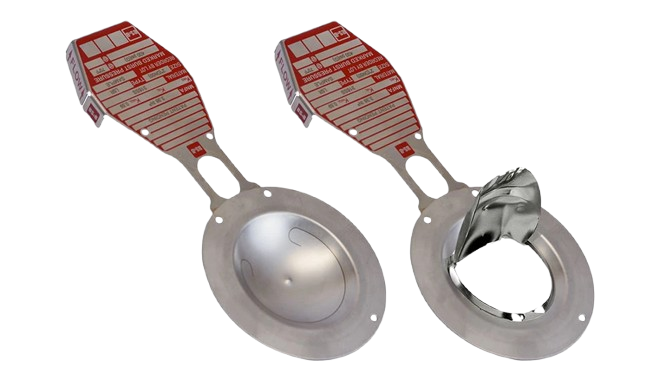
A rupture disc is a critical passive pressure protection device designed to protect pressurised equipment from excessive pressure. When the pressure inside a protected cylinder, vessel or system reaches a predetermined burst pressure, the disc opens rapidly to release pressure and help prevent catastrophic equipment failure.
For fire protection systems, a properly selected fire suppression rupture disc can provide an important additional layer of safety for cylinders and pressure-containing equipment used with gaseous, clean-agent, CO₂ and other fire-extinguishing systems.
At Advanced Times Company, we provide reliable rupture disc solutions in Saudi Arabia for industrial, commercial and fire protection applications. Our focus is to help customers select the right pressure relief solution based on operating pressure, burst pressure, temperature, system media, installation requirements and application conditions.
If you are looking for a reliable rupture disc supplier in Saudi Arabia, our technical team can help you identify the correct solution for your application.
What Is a Rupture Disc?
A rupture disc, also known as a burst disc or bursting disc, is a non-reclosing pressure relief device. It is typically manufactured from a carefully selected metal or composite material and designed to open when the differential pressure reaches a specified level.
Unlike a conventional pressure relief valve, a rupture disc does not normally contain moving parts. It remains sealed during normal system operation and activates only when the pressure difference across the disc reaches its specified burst pressure.
Once the disc ruptures, the pressure is released through the designed opening path. This rapid response can help protect:
- Fire suppression cylinders
- CO₂ storage cylinders
- Clean agent cylinders
- Pressure vessels
- Fire extinguishing equipment
- Industrial process equipment
- Pressurised piping systems
- Storage tanks
- Gas and liquid handling systems
The primary purpose of a rupture disc is to provide dependable overpressure protection.
In a fire protection application, this is particularly important because pressure can increase due to abnormal operating conditions, external heat exposure, thermal expansion, chemical reactions or other unforeseen events.
How Does a Rupture Disc Work?
The operating principle of a pressure relief rupture disc is relatively simple, but the engineering behind its design and calibration is highly precise. Under normal conditions, the rupture disc remains intact and provides a tight seal. The system can therefore operate at its intended pressure without releasing the contained medium. If pressure continues to rise and reaches the specified burst pressure, the disc opens according to its engineered design.
Depending on the type of disc, it may:
- Tear along engineered scoring
- Reverse and open against a cutting mechanism
- Burst through a controlled membrane
- Open in a non-fragmenting pattern
- Provide a full-flow relief opening
The purpose of the opening is to create a rapid pressure release path. This is important because a pressure vessel or fire suppression cylinder can become dangerous when internal pressure exceeds its design limits. A rupture disc provides a predetermined point at which the pressure can be relieved.
A properly selected rupture disc for fire suppression systems should be selected according to the actual application rather than simply choosing a disc based on size alone.
Important selection parameters include:
- Normal operating pressure
- Required burst pressure
- Operating temperature
- Pressure fluctuations
- Type of extinguishing agent
- Chemical compatibility
- Installation orientation
- Back pressure
- Vacuum conditions
- Required flow capacity
- Applicable equipment requirements
Why Are Rupture Discs Important in Fire Suppression Systems?
Fire suppression systems often use pressurised cylinders to store and discharge extinguishing agents. These cylinders may contain gases or agents under significant pressure. Under normal conditions, the pressure remains within the intended operating range. However, external heat can cause pressure to increase.
For example, if a cylinder is exposed to elevated ambient temperature or fire conditions, the pressure inside the cylinder may rise. If this pressure exceeds the safe design limit of the cylinder or connected system, the consequences could be severe.
A fire suppression rupture disc can provide a dedicated pressure relief path when the pressure reaches its predetermined activation point.
The key benefits include:
1. Protection Against Excessive Pressure
The primary purpose of a rupture disc pressure relief system is to protect pressure-containing equipment from overpressure.
2. Rapid Emergency Response
Rupture discs are passive devices and can respond very quickly once the specified pressure is reached.
3. Reliable Sealing During Normal Operation
A correctly installed disc remains sealed during normal operation, helping prevent leakage of the extinguishing agent.
4. Protection Against Thermal Pressure Build-Up
Heat can increase pressure inside a sealed cylinder. A rupture disc can provide a controlled pressure relief mechanism.
5. Protection of Equipment Integrity
A pressure release device can help reduce the risk of catastrophic damage to cylinders, vessels and associated piping.
6. Passive Safety
A rupture disc does not normally require electrical power or an external control signal to activate. This passive operation makes industrial rupture discs valuable in safety-critical applications where immediate pressure response is required.
Rupture Disc Applications in Saudi Arabia
Saudi Arabia has extensive industrial, commercial and infrastructure development across sectors that depend on reliable fire protection and pressure safety equipment.
A rupture disc supplier in Saudi Arabia may support a wide range of applications, including:
Fire Suppression Systems
Rupture discs can be used in fire suppression cylinders and pressure-containing components where overpressure protection is required.
CO₂ Fire Suppression Systems
CO₂ systems store extinguishing agent under pressure. A suitable CO2 cylinder rupture disc can help protect the cylinder or pressure system against excessive pressure conditions.
Clean Agent Fire Suppression
Clean agent systems use gaseous extinguishing agents designed to suppress fire without leaving traditional water or foam residue. Pressure protection is an important consideration in these systems.
Industrial Fire Protection
Factories, processing facilities, warehouses and industrial plants may require multiple layers of pressure and fire safety protection.
Oil and Gas Facilities
Saudi Arabia has major oil, gas and petrochemical operations where pressure protection is a critical element of process safety.
Chemical Processing
Chemical processes can create pressure changes due to reactions, heating and process disturbances. A suitable pressure relief disc can form part of a wider overpressure protection strategy.
Power Generation
Power plants and energy facilities contain pressure systems and equipment that may require specialised pressure relief solutions.
Data Centres
Data centres increasingly use clean-agent fire suppression systems to protect sensitive electrical and IT equipment. Proper pressure protection is essential for the associated cylinders and systems.
Commercial Buildings
Large commercial buildings may use pressurised fire suppression equipment requiring reliable safety components.
Warehouses and Logistics Facilities
Large storage facilities may use fire suppression systems to protect goods, equipment and infrastructure.
Types of Rupture Discs
Different applications require different rupture disc designs. The correct choice depends on the pressure, temperature, media and mechanical requirements of the system.
Forward-Acting Rupture Discs
A forward-acting rupture disc operates under tensile stress. As pressure increases, the disc is forced in the direction of its designed rupture.
These discs are commonly used in a wide range of pressure protection applications.
Advantages can include:
- Simple design
- Reliable operation
- Wide material availability
- Suitable for different pressure ranges
- Compatibility with various holders and installations
Reverse-Acting Rupture Discs
A reverse-acting rupture disc is designed to operate by buckling or reversing before opening.
This design can provide advantages in applications where:
- Pressure cycles are frequent
- High operating ratios are required
- Fatigue resistance is important
- Precise pressure performance is required
Reverse-acting designs are commonly used in demanding industrial environments. Product manufacturers such as Fike and Continental Disc Corporation highlight reverse-acting technology, burst tolerances, operating ratios and cycle life as important technical characteristics.
Composite Rupture Discs
Composite designs may use multiple layers or materials to achieve specific pressure, sealing and corrosion-resistance characteristics.
They may be selected where the application requires:
- Low burst pressure
- Special chemical compatibility
- Improved sealing
- Vacuum support
- Special installation arrangements
Vacuum-Supported Rupture Discs
Some systems may experience vacuum conditions as well as positive pressure. A vacuum support rupture disc can help prevent unwanted disc deformation when pressure conditions reverse.
This is particularly important for systems that experience:
- Vacuum cycles
- Pressure fluctuations
- Cooling conditions
- Emptying or unloading operations
Specialised Rupture Discs
Specialised designs are available for unusual applications involving:
- Very low pressure
- Vacuum protection
- High pressure
- Hygienic processing
- Corrosive media
- Special pressure vessels
- Transportation tanks
Industrial suppliers often categorise rupture discs according to forward-acting, reverse-acting, specialised applications, holders and monitoring accessories.
Rupture Disc vs Pressure Relief Valve
Many engineers ask whether a rupture disc should be used instead of a pressure relief valve. The answer depends on the application.
A pressure relief valve is a mechanical device that can open and close. A rupture disc is generally a single-use pressure relief device that opens when the specified burst pressure is reached.
Key Differences
| Feature | Rupture Disc | Pressure Relief Valve |
|---|---|---|
| Moving parts | Usually none | Yes |
| Reusable after activation | No | Usually yes |
| Response | Very rapid | Depends on valve design |
| Leakage | Very low when properly installed | Possible seat leakage |
| Maintenance | Replacement after rupture | Inspection and maintenance |
| Operation | Passive | Mechanical |
| Protection | Overpressure | Controlled pressure relief |
In some applications, rupture discs and pressure relief valves are installed together.
For example, a rupture disc can be installed upstream of a pressure relief valve to help protect the valve from:
- Corrosive media
- Contamination
- Fouling
- Sticky materials
- Process deposits
Some pressure relief manufacturers specifically promote the use of rupture discs together with pressure relief valves to protect the valve and extend its service life. The correct configuration must always be determined by a qualified engineer based on the system design and applicable requirements.
How to Select the Right Rupture Disc
Selecting the correct rupture disc is a technical process.
The wrong disc can result in:
- Premature rupture
- Failure to open at the required pressure
- Leakage
- Reduced system protection
- Compatibility problems
- Unnecessary downtime
Before selecting a disc, the following factors should be evaluated.
1. Burst Pressure
The burst pressure is one of the most important parameters. The disc must open at the required pressure while remaining stable during normal operation.
The burst pressure should be evaluated against:
- Maximum allowable working pressure
- Normal operating pressure
- Pressure fluctuations
- System design pressure
- Temperature effects
2. Operating Pressure
The system’s normal operating pressure must be considered. A rupture disc should not rupture during normal operating conditions or minor pressure fluctuations.
3. Operating Temperature
Temperature affects both the disc material and the actual burst characteristics. A disc selected for one temperature range may not be suitable for another.
4. Process Media
The extinguishing agent or process medium may affect material selection.
Potential considerations include:
- Corrosion
- Chemical compatibility
- Gas composition
- Liquid exposure
- Moisture
- Contamination
5. Material Selection
Common materials may include:
- Stainless steel
- Nickel alloys
- Hastelloy
- Monel
- Tantalum
- Fluoropolymer-lined materials
- Other specialised alloys
The correct material depends on the environment and process media.
6. Vacuum Conditions
If the system can experience negative pressure, vacuum protection may be necessary.
7. Back Pressure
Back pressure can affect the actual differential pressure across the disc. This is especially important in systems connected to downstream piping or collection systems.
8. Disc Size
The disc must be compatible with the required relief flow and installation connection.
9. Holder Compatibility
The rupture disc holder must be compatible with the disc design and installation configuration.
10. Fragmentation Requirements
Some applications require a non-fragmenting rupture disc to prevent pieces of the disc from damaging downstream equipment.
Materials Used in Rupture Discs
Material selection is an important part of pressure relief engineering.
Stainless Steel Rupture Discs
Stainless steel is widely used because of its strength, availability and corrosion resistance.
Hastelloy Rupture Discs
Hastelloy may be selected for highly corrosive environments.
Monel Rupture Discs
Monel alloys may be suitable for specific chemical and marine environments.
Tantalum
Tantalum is used in highly aggressive corrosive applications where exceptional chemical resistance is required. Industrial rupture disc ranges may include stainless steel, Hastelloy, Duplex and Monel materials depending on the application. For fire suppression applications, the selected material must be compatible with the stored agent, cylinder environment, temperature and required service life.
Rupture Disc Installation
Correct rupture disc installation is essential for reliable performance. Even a high-quality disc can perform incorrectly if it is installed improperly. Important installation considerations include:
Correct Orientation
Some rupture discs are directional. The process side and vent side must be installed correctly.
Proper Alignment
The disc should be correctly aligned with the holder and connected piping.
Correct Holder
The correct holder design should be used for the specific disc type.
Proper Torque
Bolted assemblies should be tightened according to the manufacturer’s specified requirements.
Clean Installation Surfaces
Contamination, foreign material or damage to sealing surfaces can affect performance.
Avoiding Mechanical Damage
The disc should not be bent, scratched or damaged during installation.
Correct Piping Configuration
Downstream piping should not create excessive restriction or unwanted back pressure.
Following Manufacturer Documentation
Installation should follow the technical documentation supplied with the selected product.
Rupture Disc Maintenance and Replacement
A rupture disc is generally a single-use pressure relief device. After the disc opens, it must normally be replaced before the protected system returns to service.
A proper rupture disc maintenance programme may include:
- Visual inspection
- Checking for corrosion
- Checking for damage
- Verifying installation condition
- Checking for leakage
- Confirming system pressure
- Reviewing inspection records
- Replacing damaged components
- Replacing a ruptured disc
In critical applications, maintenance should be performed by qualified personnel according to the equipment manufacturer’s requirements and applicable site procedures. If a rupture disc has opened, the cause of overpressure should also be investigated. Simply replacing the disc without identifying the cause may leave the system vulnerable to another pressure event.
Rupture Disc Solutions for Saudi Arabian Industries
A Saudi industrial environment can present demanding conditions.
Depending on the location and application, equipment may be exposed to:
- High ambient temperatures
- Dust
- Corrosive environments
- Coastal humidity
- Industrial chemicals
- Frequent pressure cycling
- Remote plant locations
Therefore, choosing a rupture disc supplier in Saudi Arabia should involve more than simply purchasing a component. The supplier should understand the technical requirements of the application.
At Advanced Times Company, we aim to support customers with solutions for different industrial and fire protection requirements.
Our technical approach focuses on:
- Understanding the application
- Reviewing operating conditions
- Identifying the required pressure protection
- Matching the disc to the installation
- Considering material compatibility
- Supporting product selection
- Helping customers identify suitable replacement solutions
Saudi Arabia Fire Protection and Compliance Considerations
Fire protection projects in Saudi Arabia may be subject to applicable Saudi regulations, codes, standards and authority requirements. The Saudi Fire Protection Code, SBC 801, establishes requirements related to protection from fire and explosion hazards, life safety, property protection and emergency safety.
Saudi Civil Defense regulations also refer to specifications and standards that must be followed, including standards issued by relevant Saudi authorities or other standards approved through the applicable regulatory framework.
For pressure vessels and pressure-containing equipment, applicable engineering standards may also be relevant. ASME Section VIII, for example, covers requirements for pressure vessels including design, fabrication, inspection, testing and certification. The applicable code or standard depends on the equipment, project specifications, jurisdiction and regulatory requirements.
For this reason, customers should not select a fire suppression rupture disc solely based on size or price. The correct selection should consider the complete engineering and compliance requirements of the project.
Why Choose Advanced Times Company for Rupture Disc Solutions?
When selecting a rupture disc supplier in Saudi Arabia, customers need reliability, technical understanding and responsive support. Advanced Times Company can support customers looking for dependable pressure relief solutions for fire protection and industrial applications.
Our approach is focused on:
Technical Product Selection
We help identify the appropriate solution based on:
- Burst pressure
- Operating pressure
- Temperature
- System media
- Material
- Size
- Application
- Installation configuration
Industrial Applications
Our solutions can support requirements across:
- Fire protection
- Industrial facilities
- Oil and gas
- Petrochemical plants
- Power generation
- Manufacturing
- Chemical processing
- Commercial facilities
Quality-Focused Solutions
Pressure protection is a safety-critical application. Product quality, correct specification and appropriate installation are essential.
Saudi Arabia Market Support
For customers operating in Saudi Arabia, local access to technical support and product supply can help simplify sourcing and reduce unnecessary delays.
Application-Based Assistance
Every pressure protection application is different.
Our team can help review your requirements and guide you towards a suitable solution.
Common Rupture Disc Problems
Several common problems can affect rupture disc performance.
Incorrect Burst Pressure
If the disc is selected with the wrong burst pressure, it may activate too early or fail to provide the intended protection.
Incorrect Installation
Incorrect orientation or improper assembly can affect performance.
Material Incompatibility
The wrong material may corrode or degrade in the operating environment.
Excessive Operating Pressure
If the normal operating pressure is too close to the disc’s burst pressure, premature activation may occur.
Temperature Effects
Temperature changes can influence pressure and disc performance.
Blocked Relief Path
A blocked downstream path can prevent proper pressure release.
Incorrect Replacement
Replacing a disc with an unsuitable alternative can create a safety risk.
For these reasons, always verify the complete technical specification before ordering a rupture disc replacement.
Frequently Asked Questions
What is a rupture disc?
A rupture disc is a passive pressure relief device designed to open at a predetermined burst pressure to protect pressurised equipment from overpressure.
What is another name for a rupture disc?
Common terms include burst disc, bursting disc and pressure relief disc.
Can rupture discs be used in fire suppression systems?
Yes. A properly selected rupture disc for fire suppression systems can be used as a pressure protection component for suitable cylinders and pressure-containing equipment.
Is a rupture disc reusable?
Generally, no. Once a rupture disc has opened, it must normally be replaced.
What causes a rupture disc to burst?
A disc may open when the differential pressure reaches its specified burst pressure. External heat, thermal expansion, process conditions or abnormal pressure events can cause pressure to increase.
What is the difference between a rupture disc and a safety valve?
A rupture disc is typically a single-use passive pressure relief device, while a safety valve is a mechanical device that can open and close.
How do I select the correct rupture disc?
Selection should consider burst pressure, operating pressure, temperature, media, material compatibility, size, back pressure, vacuum conditions and installation requirements.
Can rupture discs protect CO₂ cylinders?
A suitable CO2 cylinder rupture disc may be used where required by the cylinder and system design.
Do rupture discs require maintenance?
The disc should be inspected according to the applicable maintenance programme. If it ruptures, it normally needs to be replaced.
Can a rupture disc be used with a pressure relief valve?
Yes, in some applications rupture discs and pressure relief valves are installed together. The correct arrangement depends on the engineering design.
Are rupture discs suitable for high-temperature environments?
Some rupture discs are designed for high-temperature applications. Material and design selection must be based on the actual operating conditions.
Can rupture discs protect against vacuum?
Some specialised designs can provide vacuum protection or combined pressure and vacuum protection.
Do you supply rupture discs in Saudi Arabia?
Advanced Times Company provides solutions for customers seeking rupture disc supply in Saudi Arabia and technical assistance for suitable applications.
Request a Rupture Disc Solution in Saudi Arabia
Choosing the correct rupture disc is an important part of pressure and fire safety.
Whether you require a fire suppression rupture disc, a pressure relief rupture disc, a burst disc, a rupture disc holder or a replacement solution for existing equipment, selecting the correct product specification is essential.
Advanced Times Company can help you review your application requirements and identify a suitable pressure protection solution for your project in Saudi Arabia.
Contact us today with your requirements, including:
- Equipment type
- Operating pressure
- Required burst pressure
- Operating temperature
- System media
- Disc size
- Existing product details
- Application location
- Required quantity
Our team can help you find a suitable rupture disc supplier in Saudi Arabia and support your pressure protection requirements with a solution selected for your application.
Contact Advanced Times Company today for reliable rupture disc solutions, technical support and pressure protection equipment for fire suppression and industrial applications across Saudi Arabia.