
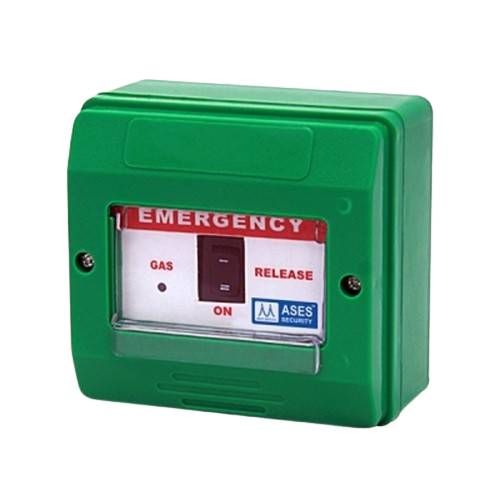
When a fire emergency occurs, every second matters. Although modern fire protection systems are designed to detect fire automatically through smoke detectors, heat detectors, flame detectors, and other initiating devices, there are situations where immediate human intervention is essential. A trained person may identify a fire before an automatic detector activates, or an automatic detection device may be affected by environmental conditions, equipment failure, damage, or another unexpected circumstance.
This is where a Manual Release becomes an important part of a properly designed fire protection strategy.
A Manual Release System provides an accessible method for authorised personnel to manually initiate a connected fire suppression process when rapid action is required. Depending on the system design, the manual release device may be connected to a releasing panel, fire suppression control panel, alarm system, or other compatible control equipment. When operated correctly, it can initiate the programmed emergency sequence required by the specific fire suppression system.
For commercial buildings, industrial facilities, warehouses, data centres, electrical rooms, telecommunications facilities, manufacturing environments, energy infrastructure, and other high-risk locations, a dependable Manual Release Station can provide an important additional layer of protection.
At Advanced Times Company, we provide professional fire safety equipment and fire protection solutions designed to support the safety requirements of modern facilities across Saudi Arabia. Our Manual Release solution is designed to provide clear, accessible, and dependable emergency fire activation where manual intervention may be required.
What Is a Manual Release?
A Manual Release is a device used to manually activate a connected fire suppression system during an emergency. It is generally installed in a clearly identifiable and accessible location so that trained and authorised personnel can initiate the appropriate fire suppression sequence when necessary.
In a typical system, the Manual Release Device is connected to a compatible fire suppression control panel or releasing control system. When the device is operated, the signal is transmitted to the control equipment. The control panel then performs the functions programmed for that specific system design.
Depending on the type of installation, the activation sequence may include:
- Initiating the manual activation of fire suppression
- Sending a signal to the fire suppression control panel
- Activating alarms and visual warning devices
- Initiating a pre-discharge warning sequence
- Activating system outputs
- Operating compatible release mechanisms
- Shutting down selected equipment where required by the system design
- Activating the connected suppression system
The exact operation of a manual release depends on the design, equipment, agent, control panel, installation method, and applicable project requirements. For this reason, selecting a Manual Fire Suppression Release should not be based only on appearance or price. The device must be suitable for the intended application and compatible with the connected fire protection system.
Why Is a Manual Release Important in Fire Protection?
Automatic fire detection is a critical part of modern fire safety. However, automatic systems are not intended to eliminate the need for human observation and emergency response.
A person may see flames, smoke, abnormal heat, or another indication of a fire before an automatic detector operates. In other situations, an automatic detection system may not respond as expected because of equipment damage, a fault, an unsuitable detector location, or environmental conditions.
A Fire Suppression Manual Release provides an additional method of initiating the emergency response.
The main benefits include:
1. Immediate Human Intervention
A trained operator may recognise a developing fire before an automatic detection device has reached its activation threshold. The Manual Release System allows the operator to initiate the appropriate emergency response without waiting for automatic detection.
2. Additional System Redundancy
A well-designed fire protection system commonly uses multiple layers of protection. Automatic detection and manual activation can work together to provide additional operational flexibility.
3. Simple and Visible Operation
A properly installed Manual Release Station should be easy to identify and accessible to authorised personnel. Clear labelling and appropriate positioning can help reduce confusion during an emergency.
4. Protection for Critical Assets
In facilities containing high-value or mission-critical assets, rapid action can help reduce the potential impact of a fire. This can be particularly important in server rooms, electrical rooms, industrial control areas, production environments, and other sensitive locations.
5. Integration with Fire Suppression Systems
The device can be designed as part of an integrated fire detection and suppression arrangement, subject to system compatibility and project design requirements.
How Does a Manual Release System Work?
The operation of a Manual Release System depends on the type of fire suppression system and control equipment used. However, the general process is straightforward.
Step 1: A Fire Emergency Is Identified
A fire may be identified by:
- A person in the protected area
- Smoke
- Flames
- Abnormal heat
- Equipment failure
- A visual inspection
- An automatic detection device
If a trained and authorised person determines that manual activation is required, the manual release can be operated according to the approved emergency procedure.
Step 2: The Manual Release Is Activated
The operator activates the Manual Release Device using the operating mechanism provided by the specific product design. The device should be installed in a location where it is clearly visible, accessible, and properly identified.
Step 3: The Signal Reaches the Control Equipment
The activation signal is transmitted to the compatible fire suppression control panel, releasing panel, or associated control equipment. The control equipment interprets the signal according to the system programming.
Step 4: The System Performs Its Designed Sequence
Depending on the installation, the system may initiate:
- Emergency notification
- Audible and visual warnings
- Pre-discharge warnings
- Equipment shutdown
- HVAC or ventilation control
- Door or damper functions
- Release sequence
- Agent discharge
The exact sequence must always follow the approved design of the installed fire suppression system.
Step 5: Emergency Response Begins
Once the system has been activated, personnel should follow the facility’s approved emergency procedures. Fire safety equipment should only be operated by trained personnel where appropriate, and the building’s emergency plan should always take priority.
Manual Release vs Automatic Fire Detection
A common question is whether a Manual Release System replaces automatic detection. In most fire protection applications, it should be considered a complementary component rather than a replacement.
An automatic fire detection system is designed to identify signs of fire automatically. It may use:
- Smoke detectors
- Heat detectors
- Flame detectors
- Aspirating smoke detection
- Linear heat detection
- Other specialised detection technologies
A manual release provides human-initiated activation.
The two approaches serve different purposes.
| Automatic Fire Detection | Manual Release |
|---|---|
| Detects fire automatically | Allows authorised manual activation |
| Operates through detectors | Operates through a manual device |
| Can respond without human intervention | Depends on human identification and operation |
| Provides early detection | Provides direct emergency intervention |
| Connects to control equipment | Sends a manual activation signal |
A complete fire safety system may use both automatic detection and manual activation to provide multiple layers of protection.
Where Are Manual Release Devices Used?
A Manual Release Station can be used in a wide range of commercial, industrial, and specialised environments.
Data Centres and Server Rooms
Data centres contain sensitive electronic equipment that can be extremely expensive to replace and difficult to restore after a fire. Many facilities use specialised clean agent fire suppression systems or other engineered suppression technologies designed for sensitive environments. A properly designed manual fire suppression release can provide authorised personnel with a direct method of initiating the emergency sequence when required by the system design.
Electrical Rooms
Electrical equipment can present significant fire risks. Electrical rooms may contain switchgear, control panels, transformers, power distribution equipment, and other critical infrastructure. A suitable Manual Release System can be integrated with the appropriate fire protection system to support emergency response.
Telecommunications Facilities
Telecommunications infrastructure supports essential communication services. A fire in a telecommunications room can create significant operational disruption. A manual activation device can form part of an integrated fire suppression system designed to protect sensitive communication equipment.
Industrial Facilities
Manufacturing plants, production areas, process facilities, workshops, and industrial environments may contain combustible materials, machinery, electrical systems, and process hazards. A Fire Suppression Release Station can support the emergency activation requirements of the facility’s engineered fire protection design.
Warehouses and Logistics Facilities
Warehouses often contain large quantities of stored goods and packaging materials. Fire can spread quickly if it is not identified and controlled. Manual activation equipment can be installed as part of the overall industrial fire protection and emergency response strategy.
Control Rooms
Control rooms are often essential to industrial operations, energy facilities, utilities, and infrastructure projects. A Manual Activation System may support the protection of these high-value environments when integrated with a compatible suppression system.
Commercial Buildings
Commercial facilities such as offices, shopping centres, hotels, hospitals, educational buildings, and other large properties may use different types of fire alarm and suppression equipment. The suitability of a manual release device depends on the specific system architecture and project requirements.
Energy and Infrastructure Facilities
Oil and gas facilities, power plants, utility installations, and other critical infrastructure environments often require specialised fire protection systems. For these applications, equipment selection must consider the hazard, environmental conditions, system compatibility, installation requirements, and applicable authority requirements.
Key Features of a Reliable Manual Release
When selecting a Manual Release, several characteristics should be considered.
Clear Identification
During an emergency, personnel should be able to quickly identify the correct device. Clear labelling and appropriate signage are important elements of a practical fire safety solution.
Accessible Installation
A manual release should be installed in a location that is accessible to authorised personnel and consistent with the approved system design. Accessibility is particularly important because the device may be needed during a rapidly developing emergency.
Durable Construction
Fire protection equipment must operate reliably in its intended environment. A robust enclosure and suitable construction can help support long-term service performance.
Reliable Activation
The device should provide a dependable signal to the compatible control equipment when operated correctly.
System Compatibility
A Manual Release Device must be compatible with the control panel, releasing system, wiring arrangement, operating voltage, and other system components. Compatibility should always be verified before installation.
Clear Operating Instructions
Where appropriate, operating instructions should be provided so that authorised personnel understand the purpose and correct operation of the device.
Suitable Environmental Protection
The environmental conditions of the installation location must be considered. Indoor and outdoor applications may have different requirements. For locations exposed to dust, moisture, temperature variation, chemicals, or other environmental factors, the selected device must be suitable for the intended environment.
Manual Release for Clean Agent Fire Suppression Systems
One of the most important applications for a Manual Release System is its integration with a clean agent suppression system. Clean agent systems are commonly used to protect areas containing sensitive equipment where traditional water-based suppression may create additional damage concerns.
Potential applications include:
- Server rooms
- Data centres
- Network rooms
- Telecommunications rooms
- Control rooms
- Electrical rooms
- Archive areas
- Equipment rooms
- High-value asset areas
A clean agent fire suppression system may include automatic detection, a releasing control panel, notification appliances, agent storage containers, distribution pipework, discharge nozzles, manual activation, and other system components.
The Manual Release Station forms part of the system’s activation architecture.
The exact arrangement depends on the design and applicable requirements. In standards-based clean-agent systems, manual release controls are generally expected to be accessible, recognisable for their intended purpose, and integrated with the system’s control and release functions.
The manual release should not be treated as an independent product disconnected from the rest of the system. The device, control panel, releasing mechanism, agent system, alarm equipment, and other components must be properly designed and compatible.
Manual Release and Fire Alarm System Integration
A Manual Fire Alarm Release may be used in a system that includes a fire alarm control panel or a dedicated releasing panel.
The exact integration depends on:
- System architecture
- Manufacturer requirements
- Control panel type
- Electrical characteristics
- System programming
- Suppression agent
- Project design
- Applicable standards
- Authority requirements
A professional system design should ensure that the manual activation signal is correctly recognised and processed by the control equipment.
This is why purchasing a device based only on a generic product description may not be sufficient. The Manual Release System Saudi Arabia market includes many different applications, and the correct product must be selected for the actual installation.
Installation Considerations for Manual Release Systems
Correct installation is essential for the reliability of any fire protection system.
Important considerations include:
Location
The manual release should be positioned according to the approved system design and applicable requirements. The location should allow authorised personnel to find and operate the device when necessary.
Visibility
The device should not be hidden behind equipment, storage materials, doors, furniture, or other obstructions.
Accessibility
The manual activation point should be accessible to authorised users.
Identification
Appropriate labels and signage can help distinguish the device from other fire alarm or building control equipment.
Electrical Compatibility
The installer must confirm that the device is compatible with the connected control equipment.
Wiring
The wiring method should comply with the requirements of the system design and applicable installation standards.
Environmental Conditions
Temperature, humidity, dust, moisture, vibration, chemicals, and other environmental factors should be considered.
System Testing
After installation, the system should be tested according to the approved commissioning procedure. A manual release should never be connected to a suppression system without appropriate design verification and commissioning.
Why Choose Advanced Times Company for Manual Release Solutions?
Selecting a supplier for fire protection equipment involves more than finding a product listing. The quality of the overall solution depends on product suitability, technical understanding, system compatibility, installation requirements, and after-sales support. Advanced Times Company is positioned to support businesses and organisations looking for dependable fire safety solutions in Saudi Arabia.
Our approach focuses on:
Product Suitability
Every fire protection application is different. We help customers identify solutions appropriate for their intended use and system configuration.
Professional Technical Support
Customers may require assistance understanding how a manual release fits into their existing or planned fire suppression system. Technical guidance can help reduce the risk of selecting an unsuitable component.
Commercial and Industrial Applications
We support the requirements of commercial, industrial, infrastructure, and other professional environments where dependable fire protection equipment is essential.
System-Focused Solutions
A manual release should be considered as part of the wider fire safety architecture. The device may need to work with detection equipment, releasing panels, alarms, suppression equipment, and other system components.
Saudi Market Focus
Customers in Saudi Arabia may need to consider local project requirements, consultant specifications, authority expectations, and applicable building and fire-protection regulations.
Saudi fire-protection projects should be evaluated in relation to applicable Saudi Building Code and Civil Defense requirements. The Saudi Fire Protection Code, including SBC 801, establishes fire and explosion protection requirements intended to support life safety, property protection, and firefighter safety.
Manual Release Solutions for Saudi Arabia
Saudi Arabia has a wide range of commercial, industrial, infrastructure, energy, logistics, hospitality, healthcare, and technology projects. The demand for reliable fire safety equipment continues to be important across environments where fire can threaten:
- Human life
- Business continuity
- Critical infrastructure
- Electronic equipment
- Industrial machinery
- Inventory
- Buildings
- Data
- Production operations
A Manual Release Saudi Arabia solution may be suitable for projects in:
- Riyadh
- Jeddah
- Dammam
- Khobar
- Dhahran
- Jubail
- Yanbu
- Mecca
- Medina
- Abha
- Tabuk
- Other locations throughout the Kingdom
The right product selection depends on the individual project requirements.
Whether you are developing a new fire suppression system, upgrading an existing installation, replacing a damaged manual activation device, or sourcing components for a larger fire protection project, Advanced Times Company can help you evaluate the appropriate solution.
Manual Release for Commercial Buildings
Commercial properties require dependable fire safety systems that can protect people, property, and business operations.
A commercial building may include:
- Offices
- Retail areas
- Hotels
- Hospitals
- Educational facilities
- Shopping centres
- Business centres
- Storage areas
- Technical rooms
The role of a Manual Release Device depends on the building’s fire protection design. In some installations, the device may be associated with a fire alarm system. In others, it may be connected to a dedicated suppression releasing system. Professional system design is essential to ensure that the device performs the intended function.
Manual Release for Industrial Applications
Industrial environments can contain multiple hazards, including:
- Flammable materials
- Combustible liquids
- Electrical equipment
- Machinery
- Process hazards
- High temperatures
- Dust
- Pressurised systems
A reliable industrial fire protection strategy may require multiple forms of detection, notification, suppression, emergency shutdown, and manual intervention. The Manual Release System can provide an additional means of activating the appropriate emergency response. For industrial projects, the selection process should consider the hazard classification, system design, operating environment, access requirements, maintenance programme, and applicable regulations.
Manual Release for Critical Asset Protection
A fire can cause damage far beyond the immediate area where flames are visible.
For organisations, the consequences may include:
- Business interruption
- Equipment replacement costs
- Data loss
- Production downtime
- Supply chain disruption
- Operational delays
- Reputational damage
This is why critical asset protection is an important part of modern fire safety planning. A properly designed fire suppression system can help protect valuable assets by providing rapid fire detection and suppression. A Manual Release Station can support this strategy by allowing authorised personnel to initiate the suppression response when required.
Manual Release and Emergency Response
Fire safety equipment is most effective when it is supported by proper procedures and training.
A facility should establish clear procedures for:
- Identifying a fire
- Raising the alarm
- Activating manual controls
- Evacuating personnel
- Contacting emergency services
- Isolating equipment where appropriate
- Preventing unauthorised operation
- Resetting and restoring the system after an event
The Manual Release should be used only according to the approved emergency procedure and system instructions.
Personnel should understand the difference between:
- A fire alarm manual activation point
- A suppression manual release
- An emergency shutdown control
- An abort or hold function
- Other emergency control devices
Clear identification helps reduce the risk of operating the wrong device during a critical situation.
Maintenance of Manual Release Systems
Regular inspection and maintenance are essential for maintaining the reliability of fire protection equipment.
A maintenance programme may include:
- Visual inspection
- Checking for physical damage
- Confirming accessibility
- Checking labels and signage
- Inspecting wiring and connections
- Testing communication with the control panel
- Testing system responses
- Confirming that the device has not been obstructed
- Reviewing system faults
- Recording maintenance activities
The exact testing and maintenance process depends on the system design, manufacturer requirements, applicable standards, and project procedures. A manual release that has been damaged, disconnected, obstructed, or incorrectly modified may not perform as intended. For this reason, maintenance should be performed by competent and appropriately qualified fire protection professionals.
How to Select the Right Manual Release
Before purchasing a Manual Release Device, consider the following questions:
What System Will It Connect To?
Identify the fire alarm panel, suppression releasing panel, or control equipment.
What Is the Intended Application?
Determine whether the device will be used for:
- Clean agent suppression
- Gas suppression
- Industrial suppression
- Special hazard protection
- Fire alarm activation
- Another emergency control function
Is the Device Compatible?
Check the electrical and operational compatibility with the existing system.
Where Will It Be Installed?
Consider indoor, outdoor, industrial, technical, hazardous, or environmentally challenging locations.
Is It Easy to Identify?
The device should be clearly distinguishable for its intended purpose.
Is It Accessible?
The installation should allow authorised personnel to reach the device when required.
Does the Project Have Specific Requirements?
Consultants, contractors, authorities, insurers, and project specifications may require particular standards, approvals, or product characteristics.
Is Technical Support Available?
For complex fire protection projects, technical assistance can be valuable before purchase and during installation.
Manual Release vs Manual Call Point
The terms Manual Release and Manual Call Point are sometimes used interchangeably, but they can refer to different functions. A manual call point is generally used to manually initiate a fire alarm signal. A manual release is generally used to manually initiate a connected fire suppression or release sequence.
The correct terminology depends on the system and product design.
For example:
- A Manual Call Point may send a fire alarm signal to a fire alarm control panel.
- A Manual Release Station may initiate a suppression release sequence.
- A Manual Fire Suppression Release may activate a releasing control system.
- An emergency shutdown device may stop equipment or processes.
Because these functions can be different, the system designer must ensure that the correct device is selected for the intended purpose. This distinction is particularly important in engineered fire suppression systems.
Compliance and Standards Considerations in Saudi Arabia
Fire protection projects in Saudi Arabia may involve several layers of requirements.
Depending on the project, these may include:
- Saudi Building Code requirements
- Saudi Fire Protection Code requirements
- Civil Defense requirements
- Project specifications
- Consultant requirements
- Manufacturer requirements
- Applicable international fire protection standards
The Saudi Fire Protection Code is designed to address fire and explosion protection, life safety, property protection, and safety for firefighters and rescue personnel. However, compliance should not be assumed simply because a product is described as a manual release. The complete installation must be evaluated based on the project, system design, product approvals, compatibility, installation method, and authority requirements.
Customers should always confirm the applicable requirements for their specific project. Advanced Times Company can assist customers in identifying suitable fire protection solutions for their application and project requirements.
Why Buy a Manual Release from a Professional Fire Protection Supplier?
A low-cost component may not always be the most suitable solution for a safety-critical application.
A professional supplier can help with:
- Product selection
- System compatibility
- Technical information
- Application guidance
- Replacement requirements
- Project sourcing
- Fire protection equipment supply
This is especially important when the Manual Release System is part of a larger engineered system. The objective is not simply to purchase a box or activation device. The objective is to ensure that the selected component supports the intended fire safety system.
Request a Manual Release Solution in Saudi Arabia
If you are looking for a reliable Manual Release System Saudi Arabia, Advanced Times Company can help you identify a suitable solution for your project.
Whether you need a manual activation device for a commercial facility, industrial environment, data centre, electrical room, control room, telecommunications facility, or other protected area, the correct product should be selected according to the connected system and application requirements.
Contact Advanced Times Company to discuss your requirements for:
- Manual Release
- Manual Release Station
- Fire Suppression Manual Release
- Manual Fire Suppression Release
- Fire Suppression Equipment Saudi Arabia
- Fire Protection Equipment
- Industrial Fire Protection
- Fire Safety Solutions in Saudi Arabia
Our team can help you evaluate the application, system compatibility, project requirements, and appropriate fire protection solution.
Frequently Asked Questions About Manual Release Systems
What is a Manual Release?
A Manual Release is a device used to manually activate a connected fire suppression or emergency release system. It allows authorised personnel to initiate the programmed emergency response when manual intervention is required.
What is the difference between a Manual Release and a Manual Call Point?
A manual call point is generally used to activate a fire alarm signal, while a manual release is generally used to activate a connected fire suppression or release sequence. The exact function depends on the system design and product configuration.
Is a Manual Release necessary for every fire suppression system?
Not necessarily. The requirement depends on the type of suppression system, hazard, project design, applicable standards, authority requirements, and system configuration. A qualified fire protection professional should evaluate the specific application.
Can a Manual Release activate a clean agent system?
A suitable Manual Release System can be integrated with a compatible clean agent suppression system when included in the approved system design. Compatibility between the manual device, control equipment, releasing mechanism, and suppression system is essential.
Where should a Manual Release Station be installed?
The location depends on the approved system design and applicable requirements. Generally, the device should be clearly identifiable, accessible to authorised personnel, and protected from obstruction or accidental damage.
Can a Manual Release be used outdoors?
Some devices may be suitable for outdoor or harsh environments, but the specific environmental rating must be confirmed for the intended installation. Outdoor locations may expose equipment to moisture, dust, heat, humidity, and other conditions.
Does a Manual Release replace automatic fire detection?
No. In most applications, manual activation and automatic detection perform different functions. A complete fire safety strategy may use both automatic detection and manual activation.
Is a Manual Release compatible with every fire suppression panel?
No. Compatibility must be verified. The device must be suitable for the electrical, operational, and control requirements of the connected system.
How often should a Manual Release be tested?
Testing should follow the manufacturer’s instructions, the system maintenance programme, applicable standards, and project requirements. Regular inspection and testing help confirm that the device remains available and functional.
Can Advanced Times Company supply Manual Release systems in Saudi Arabia?
Advanced Times Company provides fire protection and safety solutions for customers in Saudi Arabia. Contact the company to discuss your application, system requirements, and product sourcing needs.
What information should I provide when requesting a quotation?
For faster technical assistance, provide:
- Project location
- Application
- Type of fire suppression system
- Existing control panel information
- Required quantity
- Indoor or outdoor installation
- Technical specifications
- Project drawings or equipment details where available
This information can help identify a more suitable Manual Release Device for your application.
Final Safety Note
A Manual Release is a safety-critical component and should be selected, installed, tested, and maintained as part of a properly designed fire protection system. The correct product depends on the connected equipment, application, environment, system design, applicable requirements, and authority expectations.
For professional assistance with Manual Release Systems in Saudi Arabia, contact Advanced Times Company to discuss your project requirements.