 Skip to content
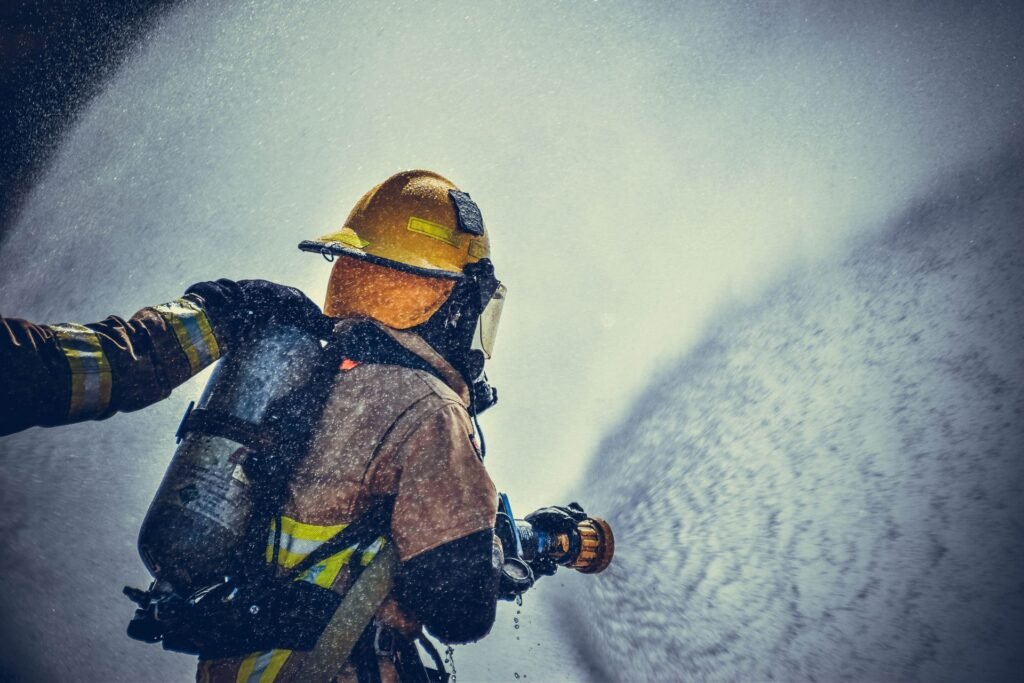
Choosing a fire fighting nozzle is not simply a matter of picking a nozzle that fits a hose. The correct model must match the fire protection system, hose connection, operating pressure, required flow, application and project specifications. For facilities in Saudi Arabia, environmental conditions also matter. High temperatures, dust, coastal humidity and demanding industrial environments can affect equipment durability and maintenance requirements. If you are looking for a fire fighting nozzle Saudi Arabia solution for a commercial building, warehouse, industrial facility, hospital or oil and gas project, this guide explains what to consider before procurement.
What Is a Fire Fighting Nozzle?
A fire fighting nozzle is the component fitted to the end of a firefighting hose that controls and directs the discharge of water. Depending on its design, it can provide a straight stream, fog pattern, adjustable spray or controlled flow. The nozzle is therefore an important part of the overall firefighting arrangement. A suitable nozzle helps operators direct water where it is needed while maintaining the required discharge characteristics.
Modern fire hose nozzles are available in different sizes, materials, connection types, flow configurations and spray patterns. The right choice depends on the system rather than the nozzle alone. For example, a hose reel serving a commercial building may require a different nozzle arrangement from an industrial fire brigade, hydrant system or high-risk petrochemical facility.
Saudi fire protection requirements also vary according to building type and application. Saudi Civil Defense maintains regulations covering fire protection and safety requirements for different facility categories, while its official guidance also references fire protection systems and Saudi Building Code requirements.
Types of Fire Fighting Nozzles
There is no single nozzle that is ideal for every application. Understanding the main types makes it easier to identify the correct product for a project.
Adjustable Fire Nozzle
An adjustable fire nozzle allows the operator to change the discharge pattern according to the firefighting situation. Common settings can include straight stream, narrow fog and wider fog patterns. This makes adjustable nozzles versatile for many commercial, institutional and industrial applications. They are useful when operators need flexibility rather than a single fixed discharge pattern.
Straight Stream Fire Nozzle
A straight stream nozzle produces a concentrated water stream designed for reach and penetration. This type can be useful when water needs to travel a greater distance or reach a fire from outside a structure. The actual performance depends on the nozzle design, available pressure, flow and overall system configuration.
Fog Fire Nozzle
A fog nozzle breaks the water stream into smaller droplets and provides a broader discharge pattern. Fog patterns can be useful for heat control and firefighter protection in appropriate applications. However, the selected pattern should always match the firefighting procedure, system design and manufacturer’s instructions.
Variable-Flow Fire Nozzle
Variable-flow models allow operators to adjust water discharge according to operational requirements. They can be particularly useful for fire brigades, industrial facilities and applications where different fire conditions may require different flow rates.
Fire Hose Reel and Branch-Pipe Nozzles
Hose reel nozzles and branch-pipe arrangements are commonly used in building and fixed fire protection applications. Their suitability depends on the hose reel, valve, coupling and water supply arrangement.
The important point is compatibility. A nozzle should not be selected independently from the equipment it will connect to.
How to Choose the Right Fire Fighting Nozzle in Saudi Arabia
The most important step is to treat nozzle selection as part of the complete fire protection system.
1. Start With the Application
First identify where the nozzle will be used. A commercial office, warehouse, hospital, factory, refinery and airport can have very different fire risks and operating requirements.
For example, an industrial facility may require heavy-duty equipment capable of handling demanding operating conditions, while a building hose reel may have a more specific flow and connection requirement.
Advanced Times Company works with residential, commercial and industrial fire protection applications in Saudi Arabia, so product selection can be considered in relation to the broader project rather than as an isolated component.
2. Check Pressure and Flow Requirements
Pressure is one of the most important technical considerations when selecting a fire hose nozzle. The nozzle must work with the available water supply from the fire pump, hydrant, hose reel or other source. Adequate pressure and flow are essential for achieving the intended nozzle performance.
NFPA material on spray nozzles specifically notes that nozzles cannot provide satisfactory performance when adequate water pressure and volume are unavailable. This means a nozzle should never be selected based only on its physical appearance or connection size.
The procurement team should verify:
- Required operating pressure
- Available system pressure
- Required flow rate
- Hose diameter
- Pump capacity
- Hydrant or hose reel configuration
- Required discharge pattern
3. Match the Hose and Coupling
Connection compatibility is another critical consideration.
A nozzle may be available in sizes such as 1 inch, 1.5 inch, 2 inch or 2.5 inch, but the correct choice depends on the hose and coupling arrangement used by the project. Thread type and coupling configuration must also be verified. A nozzle that cannot correctly connect to the existing system is not a practical solution, regardless of its other specifications. For project procurement, always provide the supplier with the hose size, coupling specification and existing system details before requesting a quotation.
4. Select the Appropriate Material
Material affects weight, durability, corrosion resistance and service life. Brass is commonly selected where corrosion resistance and mechanical durability are important. Aluminum can offer a useful balance between strength and lower weight, which may help with operator handling.
For coastal locations such as Jeddah or industrial environments exposed to aggressive conditions, material and protective finish deserve particular attention. The goal is not to select the most expensive material. It is to select a material appropriate for the operating environment and expected service conditions.
5. Consider Saudi Environmental Conditions
Saudi Arabia presents several environmental challenges for fire protection equipment.
Equipment may be exposed to:
- High ambient temperatures
- Dust and sand
- Coastal humidity
- Salt-laden air
- Industrial contaminants
- Frequent outdoor exposure
For this reason, corrosion resistance, construction quality and proper storage should be included in the procurement decision. A nozzle installed in a coastal facility may have different material priorities from one used in an indoor commercial building in Riyadh.
6. Verify Certifications and Project Requirements
Certification should be checked against the actual project specification rather than assumed.
Depending on the application and manufacturer, fire hose nozzles may be available with internationally recognized approvals or certifications. Saudi Aramco’s published fire protection material, for example, identifies UL Listed and FM Approved requirements for relevant fixed and portable fire hose nozzle applications.
Advanced Times also advises confirming certification requirements before procurement because the required approval can depend on the manufacturer, model, application and project specification.
This is particularly important for industrial, oil and gas, infrastructure and major commercial projects.
Key Specifications to Check Before Buying
Before placing an order for a fire nozzle in Saudi Arabia, create a simple technical checklist.
| Specification | What to Verify |
|---|---|
| Nozzle type | Adjustable, straight stream, fog, variable flow or other |
| Connection size | Match the existing hose/coupling |
| Thread/coupling | Confirm exact connection standard |
| Flow rate | Match project requirements |
| Operating pressure | Confirm against system pressure |
| Material | Brass, aluminum or other specified material |
| Spray pattern | Straight, fog or adjustable |
| Application | Hose reel, hydrant, industrial, fire brigade etc. |
| Certification | Confirm required project approval |
| Environment | Indoor, outdoor, coastal or industrial |
| Manufacturer data | Request technical datasheet |
| Compatibility | Verify with the complete system |
This checklist can prevent a common procurement mistake: buying a technically good nozzle that is unsuitable for the actual installation.
Where Are Fire Fighting Nozzles Used in Saudi Arabia?
Fire hose nozzles are used across a wide range of fire protection applications.
In Riyadh, requirements may include commercial towers, warehouses, government buildings, hospitals, factories and large mixed-use developments.
In Jeddah, coastal humidity and marine exposure can make corrosion resistance an important consideration for equipment installed in or near the coast.
In Dammam, Khobar and the Eastern Province, industrial, energy, petrochemical and logistics applications can create additional requirements for robust fire protection equipment.
More broadly, fire fighting nozzles can form part of:
- Fire hydrant systems
- Fire hose reel systems
- Industrial fire protection systems
- Fire brigade equipment
- Emergency response equipment
- Warehouses
- Manufacturing plants
- Hospitals
- Airports
- Oil and gas facilities
- Marine and port facilities
The final specification should always be based on the engineered system and the requirements of the specific facility.
How to Choose a Fire Nozzle Supplier in Saudi Arabia
Price is important, but it should not be the only factor when purchasing fire protection equipment. A reliable fire nozzle supplier Saudi Arabia should be able to help you confirm technical compatibility before supply.
Ask the supplier:
- What nozzle type is suitable for my application?
- What flow rate and pressure is required?
- Does the connection match my existing hose and coupling?
- What material is used?
- Is the product suitable for outdoor or coastal conditions?
- What certification or approval is available?
- Can you provide the technical datasheet?
- Can the nozzle be supplied as part of a larger fire protection solution?
- Is technical support available for project requirements?
- What inspection and maintenance guidance is provided?
These questions are particularly useful for contractors, consultants and procurement teams handling complete fire protection projects.
Why Choose Advanced Times Company?
Advanced Times Company for General Contracting provides fire protection solutions for residential, commercial and industrial properties throughout Saudi Arabia. The company’s product and service portfolio includes fire suppression systems, fire hydrant systems, fire sprinkler systems, fire hoses, nozzles, pumps, valves, fire alarm systems and related safety equipment.
This broader capability is useful when a nozzle is part of a larger project rather than a standalone replacement. Advanced Times focuses on product selection, system requirements, installation and ongoing fire protection support. Its Riyadh operation also provides a practical base for supporting projects across the Kingdom.
If your project requires a fire fighting nozzle Saudi Arabia solution, the best starting point is to provide the application, hose size, connection type, pressure requirements and required certification. This allows the appropriate nozzle configuration to be evaluated before procurement.
Frequently Asked Questions
What is the difference between a fire nozzle and a fire hose nozzle?
The terms are often used interchangeably. A fire hose nozzle generally refers to a nozzle connected to a firefighting hose to control and direct water discharge.
Which fire nozzle is best for industrial applications?
There is no universal answer. Industrial applications may require adjustable, high-pressure, straight-stream or other specialized nozzles depending on the hazard, water supply, hose configuration and project specification.
Can I use the same nozzle for every fire hose?
Not necessarily. The nozzle must match the hose connection, coupling, flow requirements and operating pressure. Compatibility should be confirmed before installation.
Are fire fighting nozzles required to be UL or FM approved?
Approval requirements depend on the project, application and specification. Some Saudi industrial and oil and gas applications may require specific internationally recognized approvals. Always verify the required certification before procurement.
Where can I buy a fire nozzle in Riyadh?
You can contact a Saudi fire protection supplier such as Advanced Times Company and provide your project requirements for product selection and quotation.
Can I get fire hose nozzles in Jeddah or Dammam?
Yes. Fire protection equipment is supplied for projects throughout Saudi Arabia. The appropriate product should be selected based on the project’s technical and environmental requirements rather than location alone.
Get the Right Fire Fighting Nozzle for Your Project
A fire fighting nozzle is a relatively small component, but its performance depends on much more than the nozzle itself. Pressure, flow, hose compatibility, connection type, material, spray pattern, certification and operating environment all need to be considered.
For commercial, industrial and institutional projects in Saudi Arabia, selecting the correct equipment at the procurement stage can help avoid compatibility problems and unnecessary replacement costs later. If you need a fire nozzle supplier Saudi Arabia for a new installation, replacement or fire protection project, contact Advanced Times Company with your hose size, application and technical requirements. The team can help assess the appropriate nozzle solution and how it fits into your wider fire protection system.