 Skip to content

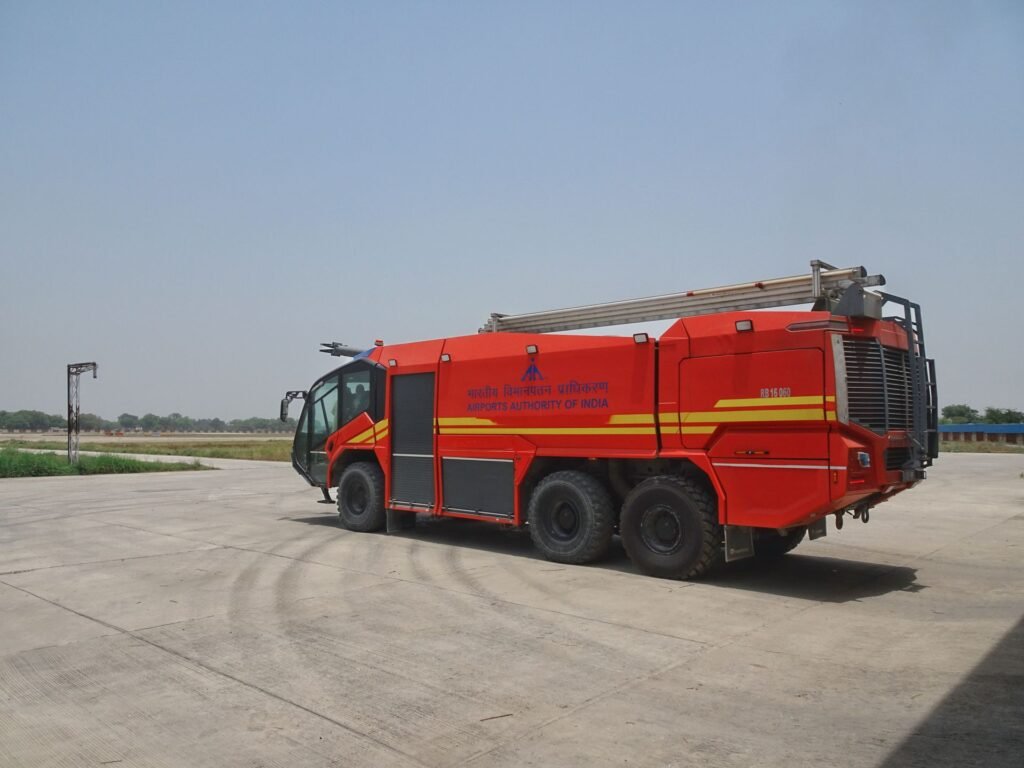
Airport communication rooms keep essential digital services connected. They support network infrastructure, telecommunications, operational data exchange, security communications and other systems that airport teams depend on every day. A fire in one of these rooms can damage expensive electronic equipment, interrupt critical services and create operational challenges far beyond the room itself. Effective airport communication room fire protection therefore requires more than installing a fire extinguisher or a gas cylinder. It involves early detection, an appropriately engineered suppression system, reliable control interfaces, suitable room conditions and a maintenance plan that keeps the entire system ready.
For airport operators, MEP consultants, IT managers and project contractors in Saudi Arabia, understanding these requirements is an important step towards protecting critical infrastructure and maintaining operational continuity.
Why Airport Communication Rooms Need Dedicated Fire Protection
Airport communication rooms contain equipment that is sensitive to heat, smoke, electrical faults and contamination. Network switches, routers, fibre-optic distribution equipment, servers, power supplies and communication cabinets may operate continuously, often with limited opportunities for unplanned shutdowns.
Several factors make these spaces particularly important to protect.
First, a relatively small electrical fire can damage equipment serving multiple departments. Second, smoke and combustion residues may affect equipment that the flames never reach directly. Third, replacing damaged hardware, restoring configurations and verifying network connections can take considerably longer than controlling the initial fire.
An airport telecom room fire suppression system should therefore be selected according to the room’s actual hazards, equipment density, occupancy and operational importance. The objective is to detect a developing fire early, suppress it effectively and limit avoidable secondary damage.
The protection strategy must also account for personnel safety, safe evacuation, emergency procedures and coordination with the airport’s wider fire protection arrangements.
Common Fire Risks in Airport Telecom and IT Rooms
Understanding the ignition risks helps engineers select suitable detection and suppression measures.
Electrical faults and overheating: Power supplies, distribution equipment, UPS components and overloaded or damaged connections can generate excessive heat. Electrical faults may also ignite nearby cable insulation or other combustible materials.
Cable congestion: Dense cable bundles and poorly managed cable routes can complicate inspections and create concealed ignition locations. Cable penetrations through walls and floors may also compromise fire compartmentation if they are not properly protected.
Continuous equipment operation: Communication equipment often operates around the clock. Heat accumulation, blocked ventilation, cooling-system failure and deteriorating components can increase the likelihood of equipment faults.
Dust and maintenance activities: Dust accumulation, loose connections, temporary electrical work and poorly managed maintenance activities can introduce additional risks.
Changes to room configuration: Adding server racks, moving equipment or modifying HVAC arrangements can change airflow, heat loads and the enclosure conditions on which a gaseous suppression system depends.
These risks demonstrate why fire protection should be coordinated with electrical design, cable management, cooling, building fire alarms and operational procedures rather than treated as an isolated installation.
Essential Components of an Airport Communication Room Fire Suppression System
A properly engineered airport communication room fire suppression system brings together several components that work as a coordinated arrangement.
1. Early fire detection
Smoke detection provides an essential first layer of protection. Depending on the risk assessment, room configuration and applicable design requirements, engineers may consider conventional or addressable detection, aspirating smoke detection, or additional detection within equipment cabinets.
Aspirating systems actively draw air through sampling pipes for analysis and may be suitable where very early warning is important. Their suitability depends on the environment, airflow, maintenance requirements and the design of the protected space.
Detection arrangements should identify the intended alarm stages and communicate clearly with the building fire alarm system or airport monitoring infrastructure.
2. Automatic clean-agent suppression
A clean agent fire suppression system in KSA can be appropriate for selected communication and IT rooms because it can suppress certain fires without leaving the water residue associated with conventional sprinkler discharge.
The system normally includes an extinguishing-agent supply, cylinder valves, distribution pipework, discharge nozzles, release controls and the necessary detection and alarm interfaces. The precise configuration depends on the selected agent and the engineered design.
Clean agents are not a replacement for every other fire protection measure. The wider building strategy may still require sprinklers, fire compartmentation, portable extinguishers and other measures under the applicable codes and approved design.
3. Release controls and occupant warnings
Where automatic gaseous suppression is installed, the release sequence must be designed around the applicable requirements and the hazards of the space. Depending on the approved arrangement, this may include pre-discharge warnings, a time delay, manual release, abort controls where permitted, and signals to indicate system status.
The design must also address safe evacuation, alarm communication and any necessary interlocks. These controls should be coordinated with airport operations and the relevant fire alarm system.
4. Room integrity and pressure management
A total-flooding system depends on maintaining the required agent concentration for the specified hold time. Unsealed cable penetrations, open doors, poorly controlled ventilation and other leakage paths may undermine performance.
The design should consider enclosure integrity, HVAC shutdown or damper control where required, and pressure-relief arrangements where necessary. An enclosure integrity test, such as a door-fan test, can help assess whether the room is likely to retain the extinguishing agent for the required period.
A system should not be considered effective simply because the cylinders and nozzles have been installed.
Choosing the Right Fire Suppression Agent for an Airport
The best solution depends on the room’s risk profile, design conditions, occupancy, applicable requirements, environmental considerations and lifecycle costs.
FM-200 fire suppression system for airports
FM-200, also known as HFC-227ea, is a gaseous clean agent used in engineered fire suppression systems. It can suppress suitable fires without leaving solid or liquid extinguishing-agent residue on protected equipment.
An FM-200 fire suppression system for an airport may be considered for communication rooms, server rooms, electrical spaces and other applications where an appropriately designed clean-agent system is suitable.
However, the design must account for the required agent concentration, room volume, discharge performance, personnel exposure limits, enclosure integrity and the manufacturer’s system requirements. Environmental considerations, including the agent’s global-warming potential and applicable restrictions, should also be assessed during procurement.
Novec 1230 and inert-gas alternatives
FK-5-1-12 systems, commonly associated with the Novec 1230 trade name, and inert-gas systems may also be evaluated for critical electronic environments. Their suitability depends on the specific product, availability, project requirements and applicable regulations.
Inert-gas systems use gases such as nitrogen or argon-based mixtures to reduce oxygen concentration to a level that suppresses combustion. They require careful engineering because discharge can create significant room-pressure changes and the atmosphere must remain suitable for the intended occupancy.
| Selection factor | Clean-agent chemical systems | Inert-gas systems |
|---|---|---|
| Suppression approach | Chemical agent suppresses fire primarily through heat absorption | Gas mixture reduces oxygen concentration to suppress combustion |
| Residue | Generally leaves no extinguishing-agent residue | Leaves no extinguishing-agent residue |
| Storage considerations | Depends on agent, cylinder pressure and system design | May require larger gas storage capacity |
| Room engineering | Agent concentration, leakage and pressure relief matter | Gas concentration, leakage and pressure relief matter |
| Environmental assessment | Review the specific agent’s environmental profile and applicable restrictions | Review gas supply, storage, equipment and lifecycle requirements |
| Final selection | Based on risk, design, compliance and lifecycle costs | Based on risk, design, compliance and lifecycle costs |
Neither option should be selected solely because it is marketed as suitable for server rooms. A qualified designer should establish the appropriate solution from the project’s actual requirements.
Engineering Requirements for Airport Server and Communication Rooms
A reliable airport server room fire protection system begins with accurate project information.
Calculate the protected volume
Engineers need the room’s dimensions and effective protected volume to determine the suppression requirements. Raised floors, suspended ceilings, connected voids and adjoining spaces must be evaluated to establish the actual protection boundaries.
Coordinate equipment and airflow
Rack locations, cable trays, ventilation outlets, cooling units and discharge nozzle positions affect system design. Engineers must verify that the proposed arrangement can distribute the agent appropriately and will not interfere with equipment or maintenance access.
Protect the enclosure
Doors, cable penetrations, access panels and other openings should be reviewed for leakage and fire-compartmentation requirements. HVAC shutdown, damper operation and other interlocks must be coordinated with the system design.
Plan for people as well as equipment
Communication rooms may be occupied during routine maintenance or emergency response. Warning signals, release controls, evacuation arrangements and exposure limits require careful attention. No clean agent should be described as completely harmless under every concentration and exposure condition.
Integrate with the wider airport fire strategy
The suppression system should coordinate with detection, fire alarms, building management interfaces where required, emergency procedures and other protection systems. Redundancy and continuity measures should be considered where the communication room supports essential airport functions.
Saudi Regulations and Standards: What Project Teams Should Check
For projects in Saudi Arabia, compliance must be verified against the applicable Saudi Building Code provisions, relevant Saudi Civil Defense requirements and the approved project design.
The Saudi Fire Protection Code, SBC 801, is an important reference within the Saudi Building Code framework. NFPA 2001 is a relevant international standard for clean-agent fire extinguishing systems, covering requirements associated with system design, installation, testing, inspection, operation and maintenance.
The project team should confirm which editions, provisions and approval conditions apply to the specific airport facility. Airport operator requirements, consultant specifications and contractual obligations may introduce additional requirements.
Before installation, verify the applicable design criteria, approved equipment and documentation requirements, required inspections and testing procedures. Do not assume that following one international standard automatically establishes full compliance with every Saudi requirement.
Airport Fire Suppression System Installation in Saudi Arabia
Professional installation should follow an engineered and documented process.
Step 1: Site assessment. Review the room layout, equipment inventory, occupancy, electrical hazards, cooling arrangements and existing fire protection systems.
Step 2: System design. Establish the protected volume, agent selection, detection arrangement, cylinder capacity, pipework, nozzles, controls and necessary enclosure provisions.
Step 3: Coordination and approvals. Coordinate the design with the project consultant, airport operator and relevant authorities as required. Resolve interface requirements before installation.
Step 4: Supply and installation. Install approved components according to the engineered design and manufacturer instructions. Coordinate any shutdowns or disruptive activities with airport operations.
Step 5: Testing and commissioning. Verify detection, alarm sequences, control interfaces, manual release functions, system supervision and other specified performance requirements. Conduct the required checks without an uncontrolled discharge of extinguishing agent.
Step 6: Handover and training. Provide the required test records, system documentation, maintenance instructions and operator training.
This process helps the project team verify that the installed system matches the design and is ready for service.
Inspection and Maintenance for Long-Term Reliability
Even a well-designed system can become unreliable if it is neglected or altered without proper review.
A planned maintenance programme should address the following:
- Inspect cylinders, valves, pipework, nozzles and visible components according to the manufacturer’s instructions and applicable requirements.
- Check system pressure, agent quantity or other specified cylinder-status indicators.
- Test detection, alarms, control panels, supervisory signals and release circuits as required.
- Verify the operation of specified HVAC, damper and other system interfaces.
- Review room integrity after changes to doors, ceilings, cabling, ventilation or partitions.
- Record defects, corrective actions, test results and changes to the system.
- Arrange appropriate refilling or recharging after a discharge, where required.
Inspection and testing frequencies should follow the applicable standard, manufacturer guidance, approved maintenance programme and site requirements rather than an assumed universal schedule.
For airports, maintenance planning should also address system impairment procedures. If a critical room’s suppression system must be taken out of service, the responsible team should follow the approved notification, risk-control and restoration process.
Choosing an Airport Fire Protection Contractor in KSA
When comparing suppliers, evaluate more than the quoted price of the cylinders or suppression equipment.
Ask whether the contractor can provide a documented design, suitable equipment specifications, detection and alarm integration, installation coordination, commissioning records and ongoing maintenance support. Confirm the team’s relevant qualifications and experience, the equipment’s required listings or approvals, and the contractor’s ability to meet project-specific documentation requirements.
For an accurate quotation, prepare the room dimensions, equipment layout, ceiling and raised-floor details, existing fire alarm information, occupancy details, project location, required standards and preferred project timeline.
Advanced Times Company for General Contracting provides fire suppression solutions and information about FM-200 and Novec-related products, alongside fire detection and safety services. Its published offerings make these services relevant starting points for a discussion about a suitable solution for a Saudi Arabian communication room. The exact scope, equipment availability and project approvals should be confirmed for each enquiry.
Frequently Asked Questions
1. What is the best fire suppression system for an airport communication room?
There is no universal best system. An engineered clean-agent system or an appropriate inert-gas solution may be suitable, depending on the room’s hazards, occupancy, equipment, enclosure integrity, environmental considerations and applicable requirements.
2. Is FM-200 suitable for airport telecom rooms?
FM-200 may be suitable for appropriately designed telecom and IT rooms. Its use requires correct agent concentration calculations, compatible equipment, suitable enclosure conditions and compliance with the applicable safety requirements.
3. Does a clean-agent system replace sprinklers in an airport?
Not automatically. Clean-agent suppression protects specific hazards or spaces, while sprinklers and other building fire protection measures serve different purposes. The overall protection strategy must follow the applicable code and approved project design.
4. Why is room integrity important?
A total-flooding system must maintain the required agent concentration for the specified hold time. Excessive leakage can reduce suppression effectiveness, so enclosure integrity and relevant pressure-relief requirements must be addressed.
5. Which standards apply to airport communication room fire protection in Saudi Arabia?
The project team should review the applicable Saudi Building Code provisions, including SBC 801 where relevant, Saudi Civil Defense requirements, and applicable standards such as NFPA 2001. Airport-specific specifications and approval conditions must also be checked.
6. How can I obtain a quotation for an airport fire suppression system in Saudi Arabia?
Provide the project location, room dimensions, equipment layout, existing fire alarm details, occupancy information, applicable specifications and project timeline. These details help the supplier assess the required scope and identify the information still needed for an accurate quotation.
Protect Your Airport Communication Infrastructure
Airport communication rooms require a coordinated approach to detection, suppression, enclosure integrity, system integration and maintenance. The right solution must protect sensitive equipment while supporting personnel safety and the operational requirements of the wider airport.
Advanced Times Company for General Contracting offers fire suppression and fire safety solutions relevant to critical electronic environments in Saudi Arabia.
Planning a new installation, system upgrade or maintenance project? Contact Advanced Times Company to discuss your communication room requirements and request a project-specific quotation.
Website: https://advancedtimescompany.com/
Phone: +966 50 393 4758