
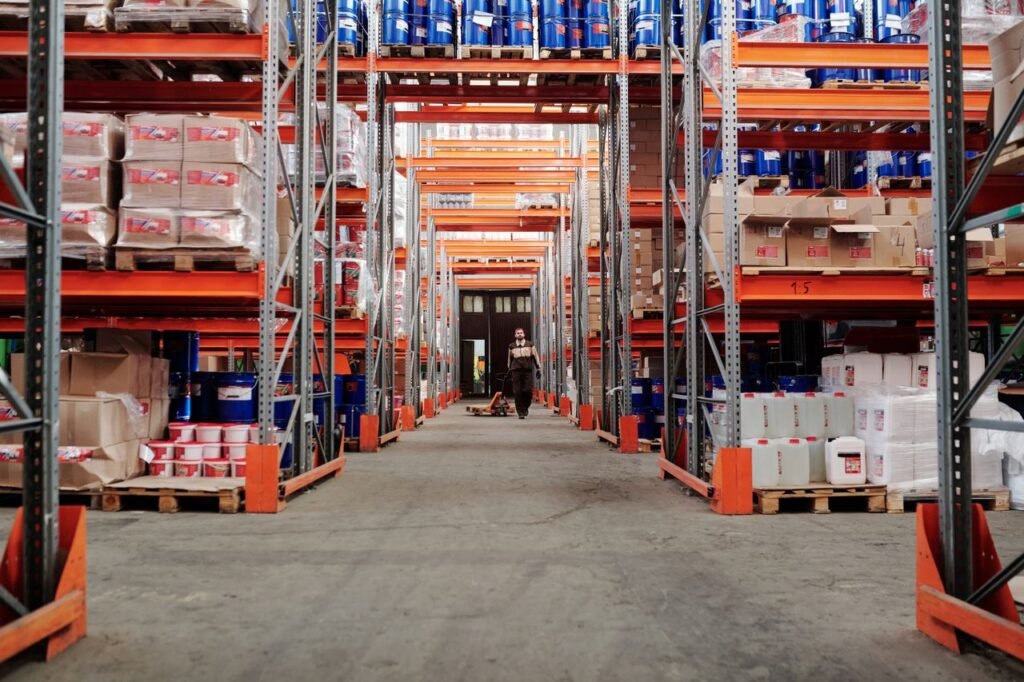
Automated warehouses are transforming the logistics and industrial sectors in Saudi Arabia. Facilities increasingly use automated storage and retrieval systems (ASRS), robotic shuttles, conveyor networks and high-density storage arrangements to improve operational efficiency and maximize available space. However, automation also changes the fire risk profile of a warehouse. Dense storage configurations, electrical equipment, battery-powered robots, combustible packaging and restricted access can create challenges that conventional warehouse protection arrangements may not adequately address. Automated Warehouse Fire Protection therefore requires a coordinated approach that considers the building, stored commodities, automated equipment, fire detection, suppression infrastructure and emergency response arrangements.
For facility owners, warehouse developers and main contractors in Riyadh, Jeddah, Dammam and other parts of Saudi Arabia, understanding these factors is important before selecting equipment or requesting a project quotation.
Advanced Times Company for General Contracting provides fire suppression system supply and installation, tube detection fire suppression systems and related fire protection products in Saudi Arabia. This guide explains the principal engineering considerations and identifies where these published services may be relevant.
Why Automated Warehouses Need Specialized Fire Protection
Traditional warehouses and automated warehouses have different operational characteristics. Conventional storage facilities generally depend on forklifts, manual picking and accessible aisles. Automated facilities may instead use robotic systems, automated cranes, shuttle mechanisms and tightly arranged storage containers.
These differences influence how a fire develops and how emergency responders can access the affected area.
High-density storage and vertical fire spread
High-bay warehouses frequently use tall storage racks to maximize vertical space. Goods may be arranged across multiple levels, sometimes with limited separation between stored materials.
Depending on the commodity and arrangement, this can create conditions that encourage fire propagation through rack spaces and combustible packaging.
A fire protection system must therefore be evaluated against:
- Actual storage height and ceiling clearance.
- Stored commodity classification.
- Packaging and pallet materials.
- Rack arrangement and aisle dimensions.
- Storage density and ventilation characteristics.
- Changes expected during future warehouse operations.
A design developed for conventional low-level storage should not automatically be assumed suitable for a high-bay environment.
Automation equipment and ignition risks
Automated warehouses introduce electrical and mechanical components that require consideration during fire risk assessment.
Potential risk sources include:
- Robotic shuttle systems.
- Automated conveyor mechanisms.
- Electrical control cabinets.
- Battery charging stations.
- Motors and electrical connections.
- Automated cranes and material-handling equipment.
Fire protection planning should consider both the storage structure and the equipment operating within it.
Understanding Warehouse Fire Protection Systems
Warehouse Fire Protection Systems may include several coordinated layers rather than a single suppression technology. The selection depends on building characteristics, storage arrangements, commodity hazards, applicable requirements and the engineered protection strategy.
Conventional sprinkler systems
Automatic sprinkler systems are commonly used in buildings where water-based fire protection is appropriate. They respond to heat conditions at individual sprinkler heads and discharge water according to the system’s design. However, sprinkler suitability depends on more than the building’s floor area.
Rack geometry, storage height, commodity classification, ceiling configuration and obstructions must be considered by the responsible fire protection engineer.
ESFR sprinkler systems
ESFR means Early Suppression Fast Response. These sprinklers are designed for specific storage applications and use higher water discharge characteristics than many conventional sprinkler arrangements.
Their suitability depends on factors such as:
- Storage commodity.
- Ceiling height.
- Maximum storage height.
- Sprinkler characteristics.
- Required water supply.
- Building configuration.
An ESFR sprinkler should not be selected simply because a warehouse has high ceilings. The design must satisfy the applicable engineering criteria and be reviewed against the actual storage arrangement.
In-rack sprinkler arrangements
In-rack sprinklers are positioned within storage rack structures where the engineered design requires protection at intermediate storage levels. They may be considered when rack configuration, commodity characteristics or other design limitations influence the suitability of ceiling-only arrangements. Their use introduces additional coordination requirements involving rack manufacturers, sprinkler designers, warehouse operators and construction contractors.
Fire detection and alarm integration
Detection is another essential part of an effective warehouse protection strategy.
Depending on the facility, engineers may assess:
- Smoke detection.
- Heat detection.
- Beam smoke detection.
- Aspirating smoke detection.
- Detection inside electrical enclosures.
- Alarm integration with automated equipment.
The objective is to establish appropriate warning and response arrangements without relying on a single detection method for every warehouse area.
ASRS Fire Protection: Risks Beyond Traditional Warehousing
ASRS Fire Protection deserves separate consideration because automated storage introduces risks that are not necessarily present in conventional warehouses. An automated system can contain robots, shuttles, conveyors, charging equipment and densely packed storage containers.
Research published by Marsh highlights the additional fire exposures associated with robotic equipment, batteries, compact storage arrangements and limitations in conventional sprinkler coverage.
Robots, shuttles and charging stations
Automated equipment can introduce potential ignition sources through electrical faults, mechanical damage, overheating and charging-related incidents.
The protection assessment should consider:
- Robot operating and charging locations.
- Electrical isolation arrangements.
- Equipment maintenance requirements.
- Emergency shutdown interfaces.
- Fire detection coverage.
- Access for emergency responders.
Coordination between the warehouse automation supplier and fire protection engineer is particularly important.
Battery-related fire exposure
Lithium-ion batteries are commonly used in modern mobile equipment. Battery-related incidents can involve thermal runaway, elevated temperatures and hazardous combustion products. The charging environment should therefore be considered as part of the warehouse fire risk assessment.
Facility operators should evaluate the battery technology, charging arrangements, equipment manufacturer’s recommendations and the suitability of emergency response provisions. A general warehouse sprinkler specification should not be treated as automatic confirmation that every battery-related hazard has been adequately addressed.
Containers, packaging and storage geometry
The construction and arrangement of storage containers can influence fire behaviour. Plastic containers, foam packaging and combustible goods may create additional fire exposure.
For automated warehouses, engineers should understand:
- Container materials.
- Whether containers are open or closed.
- Container dimensions.
- Storage orientation.
- Spacing between stored materials.
- The arrangement of robots and retrieval mechanisms.
These details should be established before finalizing the fire protection design.
High Bay Warehouse Fire Protection Considerations
High Bay Warehouse Fire Protection requires a design based on the actual storage environment rather than ceiling height alone.
Storage height and commodity classification
The fire risk of a warehouse storing metal components is different from a warehouse containing plastic packaging, textiles, paper products or combustible chemicals.
The following information is particularly important:
- Maximum storage height.
- Building ceiling height.
- Commodity type and classification.
- Packaging materials.
- Rack configuration.
- Aisle spacing.
- Proposed storage changes.
For this reason, a warehouse project should include an assessment of current and anticipated storage conditions.
Water supply, pumps and drainage
Water-based suppression arrangements depend on suitable water availability and system hydraulic performance.
The engineering assessment may consider:
- Fire water storage capacity.
- Available supply conditions.
- Pump performance requirements.
- Hydraulic calculations.
- Pipe network configuration.
- Drainage capacity.
- Access for inspection and maintenance.
Fire pumps are an important component of suitable water-based protection infrastructure. Advanced Times Company publishes electric fire pumps and jockey fire pumps among its product offerings. Relevant product information is available through its electric fire pump solutions.
Fire Suppression Options and Scope Comparison
Different warehouse areas may require different protection arrangements.
The following comparison is an educational overview, not a recommendation for a particular building.
| System / scope | Typical application | Key considerations | What to confirm in a quotation |
|---|---|---|---|
| Conventional sprinklers | Suitable general storage areas | Commodity and ceiling configuration | Design basis and hydraulic requirements |
| ESFR sprinklers | Qualifying high-bay storage | Storage height, commodity and sprinkler criteria | Applicable design limitations |
| In-rack sprinklers | Selected high-density rack arrangements | Rack geometry and storage configuration | Coordination and protection coverage |
| FM200 / Novec | Suitable enclosed technical spaces | Enclosure characteristics and agent suitability | Protected volume and system design |
| Tube detection | Electrical cabinets and enclosed machinery | Localized hazard and equipment arrangement | Protected enclosure and system configuration |
| Fire pump infrastructure | Suitable water-based systems | Flow, pressure and supply requirements | Equipment specification and project scope |
Water-based protection and clean-agent applications
Water-based systems and clean-agent systems serve different purposes. Sprinklers are commonly evaluated for suitable building and storage hazards, while clean-agent systems may be considered for enclosed areas containing sensitive electrical or electronic equipment.
Advanced Times Company publishes FM200 and Novec gas cylinders. These products should be discussed in the context of their intended applications, not as universal solutions for entire warehouse storage areas.
Read more about FM200 gas cylinders in Saudi Arabia and Novec gas cylinders.
Localized tube detection systems
A tube detection fire suppression system provides localized detection and suppression for suitable enclosed equipment.
Examples include:
- Electrical control cabinets.
- Motor control centres.
- PLC cabinets.
- UPS equipment.
- Industrial machinery enclosures.
For automated warehouse environments, these systems may be relevant where individual equipment enclosures present localized fire hazards. However, they do not replace the engineered fire protection strategy for the overall warehouse.
Advanced Times Company’s tube detection fire suppression service provides further information about this technology.
Saudi Arabia Fire Safety and Compliance Considerations
Warehouse fire protection projects in Saudi Arabia must account for local regulatory requirements, building characteristics and operational conditions.
Saudi Civil Defense and SBC 801
The Saudi Civil Defense publishes specific preventive fire protection requirements for warehouse buildings.
Its warehouse guidance addresses subjects including:
- Warehouse fire hazard classifications.
- Structural fire protection.
- Fire compartmentation.
- Emergency exits and escape routes.
- Firefighting and alarm equipment.
- Fire service access.
- Engineering services.
The Saudi Building Code also includes SBC 801, the Saudi Fire Protection Code, which establishes fire and explosion protection requirements for buildings and facilities.
Project stakeholders should ensure that the proposed design, documentation and installation comply with the requirements applicable to the specific facility. Coordination with the Saudi Civil Defense, acting as the relevant Authority Having Jurisdiction, and qualified fire protection engineers is essential. No equipment selection or general industry guideline should be interpreted as automatic approval for a particular project.
Riyadh, Jeddah and Dammam environmental considerations
Environmental conditions should be evaluated when specifying fire protection equipment across Saudi Arabia.
Riyadh: Dust exposure and environmental conditions may influence equipment enclosure protection, filtration requirements, inspection arrangements and detector suitability.
Jeddah: Coastal exposure and environmental conditions may require particular attention to equipment materials, corrosion resistance and installation suitability.
Dammam: Industrial and coastal environments should be considered when assessing equipment exposure, electrical installations and maintenance requirements.
These are project assessment considerations, not automatic requirements for every building. The equipment manufacturer and qualified engineer should determine the appropriate specifications.
Project scheduling and logistics
Warehouse installation projects must also account for operational continuity.
For facilities in Riyadh, Jeddah, Dammam and other industrial locations, planning should consider:
- Equipment transportation and procurement.
- Site access and contractor coordination.
- Existing warehouse operating schedules.
- Availability of approved construction documentation.
- Testing and inspection arrangements.
- Maintenance and operational handover.
Ramadan and Hajj-period schedules should be considered when they affect workforce availability, logistics, access permissions or operational restrictions. Planning these factors early can help reduce avoidable disruption during project execution.
How to Evaluate a Warehouse Fire Protection Quotation
A warehouse fire protection quotation should be based on actual project information. A general equipment list is not sufficient to establish whether a proposed system is suitable for an automated storage environment.
Project information checklist
Before requesting a quotation, prepare the following information:
- Warehouse location in Saudi Arabia.
- Total building area.
- Building height and maximum storage height.
- Storage rack drawings and arrangement.
- Stored commodity classifications.
- Packaging and pallet materials.
- ASRS equipment details.
- Robot and battery charging locations.
- Existing fire protection arrangements.
- Available water supply information.
- Project drawings and specifications.
- Required completion schedule.
Questions to ask suppliers and contractors
A procurement team should clarify the following before comparing proposals:
- What exact equipment and services are included?
- Is the quotation for equipment supply only or supply and installation?
- Who is responsible for engineering design and calculations?
- Does the proposed scope address the actual storage configuration?
- Are detection and suppression arrangements coordinated?
- What documentation will be provided?
- What testing, inspection and handover activities are included?
- Are maintenance and future expansion requirements addressed?
What affects project pricing?
Advanced Times Company does not publish a fixed price for automated warehouse fire protection.
The actual project cost depends on the technical scope and site requirements.
Important pricing factors include:
- Warehouse size and configuration.
- Hazard classification.
- Required system type.
- Equipment specifications and quantities.
- Installation complexity.
- Existing infrastructure.
- Project location within Saudi Arabia.
- Procurement and delivery requirements.
- Project timeline.
- Testing and documentation scope.
Request an accurate quotation: Provide your warehouse drawings, equipment details, storage information and project location to enable a meaningful scope review.
For commercial enquiries, contact Advanced Times Company at +966 50 393 4758 or shamshul@advancedtimescompany.com.
Who Should Reconsider Their Fire Protection Approach?
Not every warehouse requires a complex automated storage protection arrangement. The correct approach depends on the actual facility and its risks.
The following situations deserve particular attention:
Small residential storage requirements: Residential storage needs should not automatically be treated as industrial warehouse fire protection projects. The appropriate service provider and regulatory requirements may differ.
Facilities with unidentified stored commodities: If the materials being stored are unknown or frequently changing, the first step should be a documented hazard assessment.
Projects without approved design information: Where the building’s fire protection requirements or authority approvals are unclear, consultation with qualified professionals and the relevant Saudi Civil Defense authority should precede equipment procurement.
Automated warehouses with unusual storage containers: Highly compact ASRS configurations, specialized plastics or battery-intensive equipment may require a specialist engineering and risk review before a conventional solution can be considered.
Facilities seeking only equipment replacement: Replacing an individual component without assessing system compatibility and the original design basis may not address the underlying protection requirement.
Responsible procurement starts with understanding the hazard rather than selecting equipment based solely on availability.
How Advanced Times Company Supports Fire Protection Requirements
Advanced Times Company for General Contracting operates from Riyadh and provides fire protection and contracting-related services across Saudi Arabia.
Its published fire protection portfolio includes:
- Fire suppression system supply and installation.
- Tube detection fire suppression systems.
- FM200 gas cylinders.
- Novec gas cylinders.
- Tyco, Kidde and Fike components.
- Electric and jockey fire pumps.
- Fire protection valves and accessories.
For automated warehouse projects, the company’s published offerings may be relevant to specific suppression equipment, localized equipment protection and associated fire protection procurement requirements.
The exact project scope must be assessed before confirming suitability. Specialized ESFR sprinkler engineering and complete ASRS protection design should not be assumed to be included without separate confirmation.
The company’s positioning is “Passion to Protect.”
Its published mission is:
To empower customer to secure life, environment, property and business by delivering high quality & innovative protection solutions.
Businesses planning warehouse fire protection projects can contact the company to discuss their requirements.
Advanced Times Company for General Contracting
- Address: Office 14/A, 2nd Floor, Rasheed & Othaim Center, Malaz, Riyadh, K.S.A.
- Telephone: +966 50 393 4758
- Email: shamshul@advancedtimescompany.com
- Website: https://advancedtimescompany.com/
Frequently Asked Questions
1. What is automated warehouse fire protection?
Automated warehouse fire protection is the coordinated use of fire detection, suppression, firefighting infrastructure and emergency response arrangements to address fire hazards in automated storage facilities. It considers warehouse construction, stored goods, robotic equipment, charging stations and storage density.
2. Why do automated warehouses need specialized fire protection?
Automated warehouses may contain densely arranged combustible goods, robotic equipment, battery charging systems and restricted access routes. These factors can affect fire development, detection, suppression and emergency response. Their protection arrangements should therefore be evaluated against the actual facility configuration.
3. What is the difference between ESFR and in-rack sprinkler systems?
ESFR sprinklers are designed for qualifying storage applications using early suppression and high water discharge characteristics. In-rack sprinklers are installed within rack structures where the engineered design requires protection at intermediate storage levels. Their suitability depends on commodity type, storage height, rack geometry and applicable design criteria.
4. How does ASRS affect warehouse fire protection design?
ASRS introduces automated equipment, robots, shuttles, charging stations and potentially compact storage configurations. These features can influence ignition risk, detection requirements, sprinkler coverage, water management and firefighter access. A qualified engineer should assess the entire installation.
5. Does a conventional warehouse sprinkler system protect an automated warehouse?
Not necessarily. A system designed for conventional storage may not address the specific risks of a high-density automated arrangement. The original design basis should be reviewed against the actual storage configuration and the applicable fire protection requirements.
6. What Saudi regulations apply to warehouse fire protection?
Relevant requirements include the applicable Saudi Civil Defense preventive fire protection requirements and the Saudi Building Code, including SBC 801. The final requirements depend on the building, occupancy, stored materials and project-specific conditions. The relevant authority and qualified engineering professionals should confirm the applicable provisions.
7. What information is required to obtain a warehouse fire protection quotation?
Important information includes building dimensions, storage heights, commodity classifications, rack drawings, automation equipment, existing protection systems, available water supply, location and project timeline. This information helps establish the actual scope and commercial requirements.
8. Can tube detection fire suppression protect automated warehouse equipment?
Tube detection systems can provide localized protection for suitable enclosed equipment, such as electrical control cabinets and industrial machinery. They should not be treated as a substitute for the overall warehouse fire protection system.
9. How should warehouse fire protection systems be reviewed when storage layouts change?
Changes to stored commodities, packaging, rack heights, container arrangements or automated equipment can affect the original fire protection design. A qualified fire protection engineer should review significant changes before the revised storage configuration is placed into operation.
Conclusion
Automated Warehouse Fire Protection is an important consideration for Saudi Arabia’s growing logistics, industrial and distribution sectors. High-bay storage, automated equipment, battery-powered robots and dense storage configurations create technical challenges that require careful engineering assessment.
The appropriate approach involves understanding the warehouse’s hazards, evaluating detection and suppression options, reviewing water supply infrastructure and coordinating the project with the applicable Saudi Civil Defense requirements.
Advanced Times Company for General Contracting provides published fire suppression, tube detection and associated equipment offerings that may support relevant project requirements.
For a discussion about your warehouse fire protection requirements, contact Advanced Times Company:
Call: +966 50 393 4758
Email: shamshul@advancedtimescompany.com
Website: https://advancedtimescompany.com/