 Skip to content

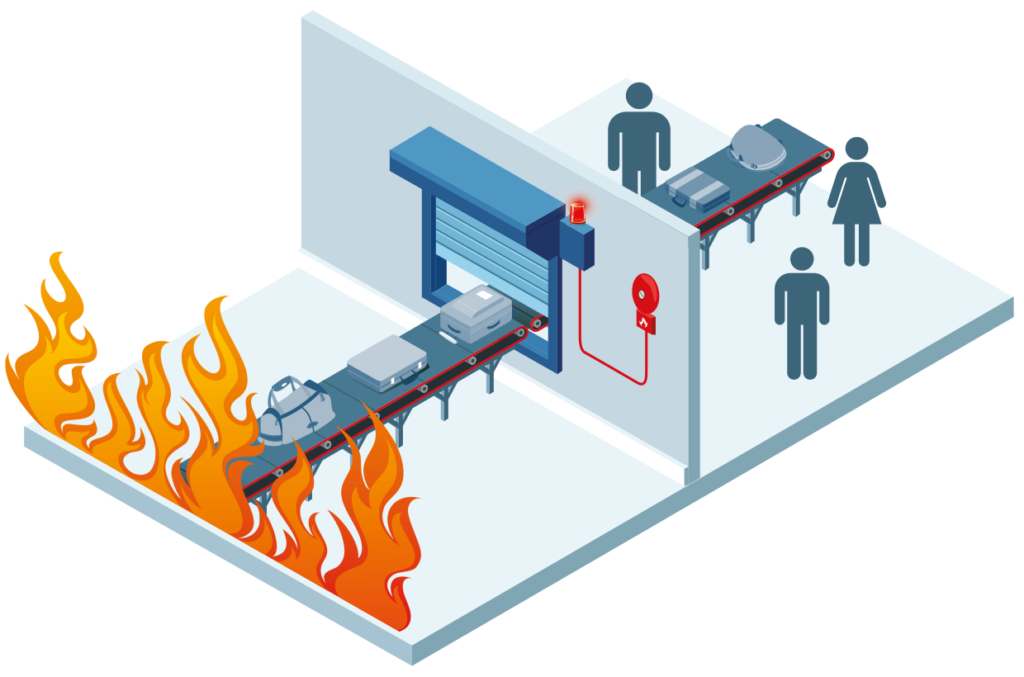
A fire inside an airport baggage handling system can disrupt more than a conveyor belt. It can damage critical equipment, interrupt baggage movement, affect terminal operations, and create serious safety risks for passengers and airport personnel. Effective airport baggage system fire protection helps identify hazards early, control fire development, and reduce the impact of an incident on airport infrastructure.
For airport operators, engineering consultants, MEP contractors, and facility managers in Saudi Arabia, fire protection should be considered during the design, installation, and operation of baggage handling equipment. The right approach combines suitable fire detection, engineered suppression where required, reliable control interfaces, and a planned maintenance programme.
Advanced Times Company for General Contracting provides fire safety and suppression system services in Saudi Arabia. This guide explains the main fire risks in baggage handling systems, the available protection approaches, and the practical considerations involved in selecting a suitable solution.
Why Airport Baggage System Fire Protection Matters
Modern airports depend on interconnected conveyors, baggage screening equipment, sorting systems, transfer mechanisms, and collection carousels. These systems often operate for extended periods and contain multiple electrical and mechanical components.
A fault in one component can affect adjoining equipment, especially where conveyors pass through enclosed spaces or connect different operational zones. Smoke, heat, and fire may also affect electrical controls and nearby combustible materials.
The consequences extend beyond physical damage. An incident may require equipment shutdown, emergency response, baggage diversion, maintenance intervention, and operational recovery. The resulting disruption can affect passengers, airlines, airport staff, and ground handling teams.
A properly designed airport conveyor fire protection system addresses these risks through a coordinated approach. It identifies potential ignition sources, detects abnormal conditions, communicates alarms, and provides appropriate suppression where the hazard assessment requires it.
The objective is not simply to extinguish flames. It is to protect people, limit fire spread, support safe emergency procedures, and help restore operations as efficiently as conditions permit.
Common Fire Risks in Baggage Handling Systems
Understanding where fires can start is the first step towards selecting effective protection.
Conveyor Belts and Transfer Points
Baggage conveyor systems contain numerous moving components and transfer points. Mechanical misalignment, friction, damaged components, or a jammed mechanism can produce abnormal heat.
Accumulated dust, packaging materials, and other combustible debris may increase the likelihood of ignition or help a fire spread. The specific risk depends on the conveyor design, surrounding materials, housekeeping standards, and operating conditions.
Baggage conveyor fire protection should therefore consider more than the main belt. Transfer points, enclosed conveyor sections, and areas where combustible materials can accumulate may require particular attention.
Motors, Bearings, and Drive Assemblies
Electric motors, gearboxes, bearings, and drive assemblies can overheat because of mechanical wear, inadequate lubrication, excessive loading, or electrical faults.
A temperature rise does not automatically mean a fire is present, but monitoring relevant equipment can help identify abnormal conditions before they escalate. The protection strategy should consider equipment criticality, accessibility, operating temperature, and the consequences of failure.
A localized suppression system may be appropriate for selected machinery where the hazard assessment supports its use.
Electrical Control Panels and Cable Routes
Control panels, motor control centres, variable-frequency drives, and electrical cable routes can contain potential ignition sources associated with loose connections, damaged insulation, overheating, or electrical faults.
These areas may require suitable smoke or heat detection, electrical protection, and an appropriate suppression arrangement. Sensitive electronics also need consideration when selecting a suppression agent.
The solution must account for the actual enclosure, ventilation, fire load, and applicable electrical and fire safety requirements.
How an Airport Conveyor Fire Protection System Works
A comprehensive protection strategy typically combines three functions: detection, alarm communication, and suppression.
1. Early Fire Detection
An airport fire detection system in Saudi Arabia should be selected according to the environment and the hazard being monitored.
Depending on the design, suitable technologies may include point smoke detectors, heat detectors, aspirating smoke detection, or linear heat detection. These technologies are not interchangeable in every application.
For example, smoke detection may be useful in suitable enclosed spaces, while heat detection can be considered around machinery where temperature changes are a relevant indicator. Aspirating detection may be appropriate for selected critical areas requiring very early warning, subject to environmental conditions and system design.
Detector placement must account for airflow, dust, equipment geometry, accessibility, and potential nuisance alarms. The design should also define how alarms are identified and communicated to the responsible control or monitoring location.
2. Alarm and Control Integration
Detection is most useful when the resulting signal reaches the right people and triggers the required response.
Depending on the approved cause-and-effect design, an alarm may notify the fire alarm control panel, alert control room personnel, or initiate a controlled conveyor shutdown. Interfaces may also be required with baggage handling controls and other building systems.
Shutdown actions should never be assumed to be identical for every airport. Unplanned stops can create additional operational problems, so the sequence must be engineered with the baggage handling system integrator and relevant stakeholders.
The control strategy should clearly define alarm conditions, shutdown logic, suppression activation, manual intervention, fault reporting, and reset procedures.
3. Automatic Fire Suppression
An automatic fire suppression system for airports is intended to control or extinguish a fire in a defined hazard area when its activation conditions are met.
Depending on the risk and design, options may include an engineered clean-agent system for a suitable enclosure, another approved gaseous or chemical suppression technology, or a suitable water-based system for an application where it is appropriate.
Localized systems may also be considered for selected conveyor machinery or drive equipment.
The agent, discharge arrangement, detection method, enclosure characteristics, and safety controls must be matched to the specific hazard. A system designed for an electrical cabinet, for example, should not automatically be assumed suitable for a long conveyor tunnel or open baggage carousel.
Suppression should complement, rather than replace, suitable detection, emergency procedures, housekeeping, and maintenance.
Choosing the Right Detection and Suppression Technology
The best solution depends on the equipment being protected, the type of fire risk, the physical environment, and the project’s engineering requirements.
| Technology | Potential application | Important consideration |
|---|---|---|
| Smoke detection | Suitable enclosed areas and selected equipment spaces | Dust, airflow, and nuisance alarms |
| Heat detection | Machinery areas where temperature changes are relevant | Detection temperature and response characteristics |
| Aspirating smoke detection | Selected critical spaces requiring early warning | Sampling design, contamination, and maintenance |
| Linear heat detection | Suitable conveyor routes or defined equipment zones | Cable specification, placement, and environmental suitability |
| Clean-agent suppression | Suitable enclosed electrical or electronic spaces | Enclosure integrity, agent suitability, and personnel safety |
| Other engineered suppression systems | Selected machinery and conveyor hazards | Fire type, coverage, discharge design, and approval requirements |
This comparison is a starting point, not a final equipment specification.
For baggage handling system fire suppression, the designer should evaluate the likely ignition source, combustible materials, enclosure conditions, potential fire spread, and the consequences of agent discharge. The system should provide effective protection without introducing unacceptable risks to personnel or airport operations.
For example, if an assessment identifies a high-risk conveyor drive enclosure, the design team may consider localized heat detection or another suitable detection arrangement, a compatible suppression system, and an interface that initiates the required alarm or shutdown sequence. The final configuration must follow the approved engineering design.
Airport Fire Protection Requirements in Saudi Arabia
Airport fire protection projects in the Kingdom require careful coordination between the technical design, project specifications, applicable regulations, and the responsible approval authorities.
The Saudi Building Code, relevant Civil Defense requirements, applicable NFPA standards, and airport-specific engineering requirements may be relevant depending on the facility, system scope, and project circumstances. The applicable editions and requirements should be verified during design rather than assumed from a generic checklist.
The design team should identify the required approvals, equipment certifications, inspection arrangements, and documentation before installation begins. Airport security, access restrictions, operational schedules, and integration with existing systems may also influence project delivery.
For airport fire protection systems in Saudi Arabia, compliance cannot be established simply by selecting a recognized product or installing a detector. The complete system must be suitable for its intended hazard and meet the requirements applicable to the project.
Advanced Times Company can be approached to discuss fire suppression system requirements and the scope of a proposed project. Specific airport experience, product approvals, and project capabilities should be confirmed during technical evaluation.
Design, Installation, Testing, and Maintenance
A reliable solution starts with a clear understanding of the baggage handling system and its operating environment.
New Installations
For new projects, fire protection should be coordinated with conveyor layouts, electrical design, control systems, access arrangements, and emergency procedures.
Early coordination helps identify suitable detector locations, suppression coverage, cable routes, maintenance access, and interfaces before the equipment is commissioned. It can also reduce the need for disruptive modifications later.
Existing Conveyor Retrofits
Retrofitting an operational baggage handling system requires additional planning. Engineers should assess existing equipment, available installation space, power and signal requirements, shutdown constraints, and compatibility with current controls.
Installation activities should be scheduled with airport operations and the baggage handling system integrator. Any temporary impairment of existing fire protection should be managed through the approved site procedures.
Inspection, Testing, and Maintenance
After installation, the system should undergo the required inspection, functional testing, and commissioning checks. Documentation should identify the protected areas, detector locations, alarm interfaces, suppression equipment, and approved operating sequence.
Ongoing maintenance should follow the manufacturer’s instructions, the approved design, and applicable requirements. Depending on the equipment, checks may include detector condition, control panel faults, power supplies, system interfaces, suppression cylinder condition, pressure indicators, and discharge components.
Maintenance records and corrective actions should be documented. Changes to conveyor layouts or control logic should trigger a review of the affected fire protection arrangements.
How to Select an Airport Fire Protection Supplier in Saudi Arabia
Selecting a supplier involves more than comparing equipment prices. Airport operators and project contractors should evaluate the proposed solution against the actual fire hazards and project requirements.
Before appointing an airport fire suppression system supplier in Saudi Arabia, consider these questions:
- Can the supplier explain how the proposed system addresses the identified fire hazards?
- Are the equipment specifications, certifications, and applicable approvals documented?
- Can the design integrate with the existing fire alarm and baggage handling controls?
- Are installation, testing, commissioning, and maintenance responsibilities clearly defined?
- Does the quotation identify system coverage, exclusions, assumptions, and required interfaces?
- Can the supplier provide the technical documentation needed for review and handover?
To obtain a useful quotation, provide the supplier with the conveyor layout, equipment details, protected areas, available drawings, existing fire alarm information, project specifications, and required completion schedule.
This information helps the technical team assess the scope and identify any missing details before finalizing the proposal.
Frequently Asked Questions
What is airport baggage system fire protection?
It is a coordinated set of detection, alarm, and, where required, suppression measures designed to protect baggage conveyors, transfer points, drive equipment, electrical panels, and related infrastructure from fire hazards.
Which fire suppression system is best for airport baggage conveyors?
There is no single best system for every conveyor. The correct choice depends on the fire hazard, equipment configuration, combustible materials, enclosure conditions, operational requirements, and applicable standards.
What is the difference between baggage handling fire detection and suppression?
Fire detection identifies signs of a potential fire and communicates an alarm. Fire suppression uses a suitable extinguishing method to control or extinguish a fire. The two functions can be integrated but perform different roles.
Are airport fire protection systems required to comply with Saudi regulations?
The applicable requirements depend on the facility, project scope, relevant codes, airport specifications, and approval authorities. The design team should verify the current requirements and required approvals before installation.
How can I request an airport conveyor fire protection quotation in Saudi Arabia?
Prepare the equipment layout, details of the protected areas, existing system information, project specifications, and required scope of work. Contact Advanced Times Company to discuss your fire protection requirements and determine the next steps for a technical assessment and quotation.
Protect Your Airport Baggage Handling Infrastructure
Effective airport baggage system fire protection starts with understanding the risks and selecting a system that fits the equipment, environment, and operational requirements.
Advanced Times Company for General Contracting provides fire safety and suppression system services in Saudi Arabia. If you are planning a new baggage handling installation, upgrading existing equipment, or reviewing fire protection arrangements, contact the company to discuss your project requirements.
Request a fire protection consultation or quotation to begin evaluating the appropriate detection and suppression options for your airport baggage handling infrastructure.