 Skip to content

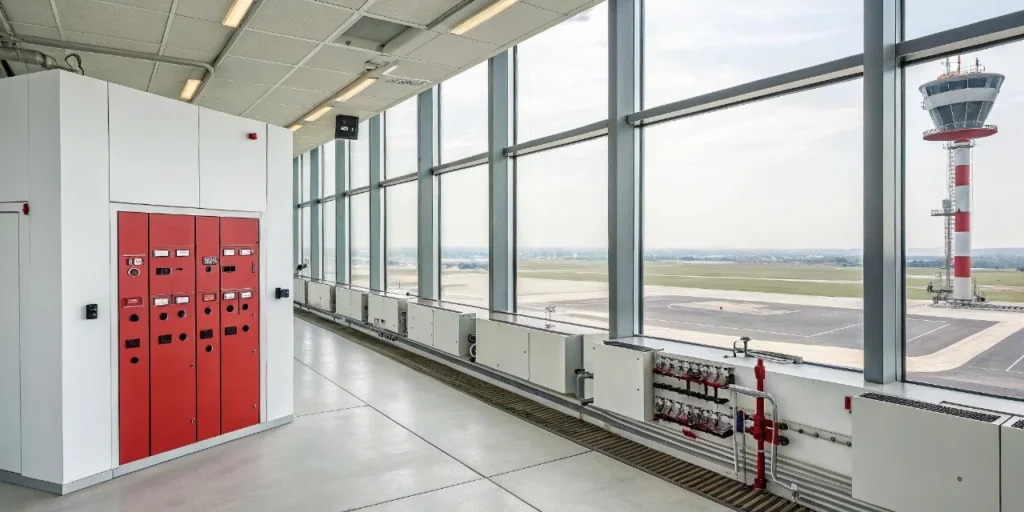
Airport control towers support critical aviation operations. Fire protection planning for these facilities must therefore account for personnel safety, electronic equipment, building systems, operational continuity, and the requirements of the relevant authorities. For facility managers, airport project teams, engineering consultants, and main contractors, Airport Control Tower Fire Protection is not simply a question of selecting a suppression agent. It requires a coordinated approach to fire detection, alarm interfaces, suppression suitability, building design, project execution, and maintenance.
Advanced Times Company for General Contracting publishes fire suppression supply and installation services, tube detection fire suppression solutions, and related fire protection products in Saudi Arabia. These published services may be relevant to specific project requirements, subject to engineering assessment and confirmation of the required scope.
This guide explains the principal considerations for planning an airport control tower fire protection project in KSA. It is intended as decision-support information, not a substitute for a project-specific engineering design or approval.
Table of Contents
- Why control towers need a coordinated fire strategy
- What should the protection scope cover?
- Comparing fire protection system options
- Saudi compliance and approval planning
- Environmental and operational considerations
- Installation, interfaces and project delivery
- Quotation checklist and project cost factors
- Who should reconsider or seek advice first?
- Frequently asked questions
- Discuss your project requirements
Why control towers need a coordinated fire strategy
An airport control tower may contain workstations, communications equipment, monitoring systems, electrical distribution equipment, server or network cabinets, and other assets essential to daily operations. The exact arrangement varies by facility.
These areas can present different fire risks. Electrical equipment, combustible furnishings, cable routes, and adjacent building spaces do not necessarily require identical protection measures. A suitable fire strategy must consider the complete facility rather than assuming that one technology can address every hazard.
A coordinated approach considers:
- Life safety: Occupant notification, safe evacuation, and appropriate emergency procedures.
- Early detection: Identification of developing fire conditions in accordance with the approved design.
- Suppression suitability: Selection of systems based on the hazard, enclosure, equipment, occupancy, and engineering requirements.
- System interfaces: Coordination between fire alarms, suppression controls, ventilation, access arrangements, and other relevant building systems.
- Operational continuity: Planning works and testing to avoid unapproved disruption to essential operations.
- Maintainability: Access to equipment, inspection requirements, documentation, and future servicing.
Fire suppression is only one component of the wider fire protection strategy. The approved design must establish how each system contributes to the building’s overall safety objectives.
What should the protection scope cover?
An airport control tower fire protection project should begin with a documented review of the facility, the hazards, and the requirements established by the project stakeholders and relevant authorities.
Control rooms and sensitive electronic equipment
Control rooms and technical spaces may contain electronic equipment that requires a carefully assessed approach to fire detection and suppression. Clean-agent systems may be considered for suitable enclosed hazards, but their suitability depends on the specific design conditions.
A project team should establish which rooms or enclosures require dedicated protection, whether the spaces can maintain the necessary enclosure conditions, and how alarms and suppression controls will interact with other systems.
Electrical cabinets and localized hazards
Electrical panels, control cabinets, UPS equipment, and machinery may warrant consideration of localized fire protection. Tube detection fire suppression is one technology used for certain enclosed or localized hazards. Advanced Times Company publishes a tube detection service for applications including electrical panels, control cabinets, machinery, server equipment, and UPS systems.
However, equipment-level protection should not automatically be treated as a replacement for room-level detection, building fire alarms, or other required fire protection measures. The responsible engineer must establish the appropriate boundaries and interfaces.
Building-wide detection and life safety
A control tower’s protection strategy also needs to address the relevant building-wide fire detection, occupant notification, emergency response, and evacuation arrangements. The exact requirements depend on the facility, its approved fire strategy, applicable regulations, and the airport operator’s requirements. A dedicated airport-wide fire alarm package should not be assumed to be included in a supplier’s suppression scope without written confirmation.
Comparing fire protection system options
The following comparison is a general technical overview. It does not recommend a particular system for an individual control tower.
| Option | Typical application | Key considerations | What to confirm in a quotation |
|---|---|---|---|
| FM200 clean-agent suppression | Suitable enclosed hazards containing sensitive equipment, subject to design | Hazard compatibility, enclosure integrity, occupancy considerations, system design and agent availability | Exact protected space, specified agent, equipment scope, engineering documentation, testing and maintenance responsibilities |
| Novec 1230 / FK-5-1-12 systems | Suitable enclosed hazards where the specified clean-agent system is appropriate | Confirm the exact agent, applicable product specification, supply availability, environmental considerations and project requirements | Product identity, current availability, approved design basis, cylinder and component scope, and support arrangements |
| Tube detection suppression | Certain localized or enclosed equipment hazards | Detection coverage, hazard configuration, compatibility with the equipment and relationship to the wider fire strategy | Protected enclosure, system configuration, component compatibility, interface requirements and inspection arrangements |
| Building fire detection and alarm | Building spaces requiring detection, notification and related fire safety functions | Detector selection, alarm zoning, interfaces, evacuation strategy and approved design | Whether the supplier’s scope includes panels, devices, cabling, interfaces, documentation and testing |
Understanding clean-agent systems
Clean-agent suppression systems are designed for specific fire hazards and can be considered where water residue or secondary damage to sensitive equipment is a concern. Their suitability cannot be determined solely by the value of the equipment being protected.
FM200 and Novec are names associated with clean-agent suppression products. Advanced Times Company’s published website lists FM200 and Novec cylinders. Product listing alone does not establish that a particular agent, cylinder, or system is appropriate for an airport project. The project engineer should assess the design requirements, the selected agent and system, room conditions, personnel considerations, applicable restrictions, and long-term supply and servicing implications.
Understanding tube detection
Tube detection systems provide a different approach, generally focused on detecting heat or fire conditions at a protected enclosure or localized hazard. They may be considered for certain cabinets and equipment compartments.
Their role is narrower than a comprehensive building fire detection and alarm system. Project teams should document precisely what the tube detection system protects and what remains covered by other approved fire safety systems.
Saudi compliance and approval planning
Airport projects may involve several stakeholders beyond the equipment supplier. Depending on the facility and the project, these can include the airport operator, the relevant Authority Having Jurisdiction (AHJ), the appointed fire protection engineer, the consultant, the main contractor, and the facilities management team. In Saudi Arabia, the Saudi Civil Defense is a key authority for applicable fire safety requirements. The responsible project team must confirm the specific approval route and technical requirements applicable to the site and scope.
Before procurement, establish:
- Which authority and airport operator requirements apply to the project.
- Which drawings, calculations, specifications, and supporting documents require review.
- Whether any existing approved fire strategy or system design must be maintained.
- Which fire alarm, suppression, ventilation, power, and monitoring interfaces must be coordinated.
- What inspection, testing, handover, and maintenance records are required.
- Whether the proposed equipment and components satisfy the project’s documented specifications.
Airport-specific requirements may impose additional reviews, access controls, work permits, or operational constraints. The project team must confirm these requirements directly with the responsible parties rather than assuming that ordinary commercial-building procedures will be sufficient.
Applicable codes and standards should be identified by the qualified engineer and confirmed against current local requirements and the approved project design. No supplier should be assumed to hold a particular certification or approval without documentary evidence.
Environmental and operational considerations
Saudi Arabia’s climate and operating conditions should be considered during project planning. Environmental conditions are relevant to equipment selection, installation details, storage, servicing, and long-term reliability.
Riyadh, Jeddah and Dammam
In Riyadh, dust exposure and hot ambient conditions may affect equipment-room housekeeping, environmental controls, and the suitability of equipment for its intended installation location. In Jeddah, coastal humidity and airborne salts may be relevant to the assessment of exposed equipment and corrosion protection. At Dammam and other locations in the Eastern Province, the actual site’s temperature, humidity, dust exposure, and maintenance environment should likewise be evaluated.
These are general environmental considerations, not a claim that one city requires a particular suppression agent. The selection must follow the actual site conditions and approved engineering requirements.
Scheduling work at operational airports
Airport control towers may need to remain operational while building services are upgraded or maintained. Before work begins, the project team should coordinate access, permits, equipment deliveries, testing windows, temporary arrangements, and any planned service interruption.
During Ramadan, Hajj-related travel periods, and other periods of high operational demand, site access and work scheduling may require additional coordination. The relevant airport operator should determine the practical work windows and restrictions. No fire protection system should be isolated, altered, or taken out of service without the required authorization and appropriate temporary safety arrangements.
Installation, interfaces and project delivery
Successful project delivery depends on a clearly defined scope and coordination among the responsible disciplines. A project brief should identify the protected spaces, hazard categories, relevant drawings, equipment interfaces, approved specifications, and responsibilities of the supplier, installer, consultant, and operator.
The project team should also establish how the proposed suppression system relates to the existing fire alarm system and other building controls. Any required shutdowns, alarm signals, ventilation interfaces, or operational notifications must be addressed in the approved design.
Testing and commissioning should be performed by appropriately qualified personnel under the applicable project procedures. The handover package should include the required documentation, operating information, maintenance requirements, and records specified by the project and relevant authorities.
For projects involving several contractors, responsibilities should be allocated explicitly. A suppression supplier should not be presumed to provide building-wide alarm integration, airport operational systems, or every associated civil and electrical activity unless those services are confirmed in the agreed scope.
Quotation checklist and project cost factors
A useful quotation begins with accurate project information. For airport fire protection systems in Saudi Arabia, the following details help suppliers understand the intended scope.
Prepare these details before requesting a quotation:
- Location: Airport and city, including relevant site-access restrictions.
- Facility details: Building use, room dimensions, enclosure information, and available drawings.
- Hazard information: Protected equipment, electrical hazards, occupancy, and relevant materials.
- System requirements: Existing detection and suppression systems, specified technology, and project documentation.
- Scope boundaries: Supply only, supply and installation, integration, testing, commissioning, or maintenance.
- Interfaces: Required connections with alarms, ventilation, monitoring, and other building systems.
- Approvals: Applicable authority and airport operator requirements.
- Programme: Required completion date, permitted working hours, access arrangements, and operational constraints.
- Handover: Documentation, training, inspection, servicing, and support expectations.
Project pricing can be affected by the protected area, hazard type, selected system, equipment quantities, existing infrastructure, installation complexity, interface requirements, site location, logistics, and delivery schedule. Advanced Times Company does not publish verified project-specific airport control tower pricing on the reviewed pages. No price should be assumed from this guide.
For a meaningful quotation, submit the available project documentation and request a written breakdown of equipment, engineering, installation, testing, exclusions, and ongoing service responsibilities.
Planning an airport fire protection project? Contact Advanced Times Company to discuss the published fire suppression services and establish whether the required scope aligns with the company’s available capabilities.
Who should reconsider or seek advice first?
Not every enquiry should begin with an equipment quotation.
Airport operators with an unresolved compliance question should first consult the responsible airport authority, Saudi Civil Defense where applicable, and their appointed fire protection engineer to establish the required design basis.
Projects seeking a complete airport alarm and operational integration package should verify that the proposed contractor can provide the entire specified scope. A supplier of suppression equipment may not necessarily provide every required alarm, communications, monitoring, and airport operational interface.
Small residential enquiries may not require an airport-specific commercial project approach. The appropriate service should match the property’s actual needs.
Projects with incomplete hazard information or no approved design basis should not select a suppression agent based solely on price or product availability. A qualified engineer should first determine the applicable requirements.
These distinctions help procurement teams avoid buying equipment that does not address the actual project scope.
Frequently asked questions
1. What does airport control tower fire protection include?
Depending on the facility and approved design, it can include building fire detection and alarms, suppression for appropriate hazards, localized equipment protection, system interfaces, documentation, and maintenance arrangements. The exact scope must be established by qualified professionals and the responsible authorities.
2. How does clean-agent suppression differ from tube detection?
Clean-agent suppression protects a suitably designed hazard by discharging a specified extinguishing agent. Tube detection systems focus on localized detection and suppression in appropriate enclosures or equipment areas. They serve different functions and should be assessed within the complete fire strategy.
3. Is FM200 automatically suitable for every airport control room?
No. Suitability depends on the hazard, room conditions, occupancy, design requirements, applicable restrictions, and the approved fire strategy. A qualified fire protection engineer must assess the specific application.
4. Who approves fire protection arrangements for an airport in Saudi Arabia?
The applicable approval route depends on the facility and project. The project team must confirm the requirements of the relevant Authority Having Jurisdiction, including Saudi Civil Defense where applicable, and the airport operator.
5. What information is needed for an airport fire suppression quotation?
Provide the project location, available drawings, protected room or enclosure details, hazard information, requested scope, existing system information, interface requirements, approval requirements, and delivery schedule. This enables the supplier to assess the enquiry and identify missing information.
6. Can localized equipment protection replace a building fire alarm system?
Not automatically. Localized protection and building-wide fire detection and alarm systems have different purposes. The approved design must establish the required coverage, interfaces, and responsibilities for each system.
7. How should fire protection work be scheduled in an operating airport?
Coordinate the work with the airport operator and responsible safety personnel. Confirm access, permits, approved testing windows, service interruptions, temporary arrangements, and handover requirements before work begins.
8. What maintenance and documentation should a project team plan for?
Plan for the inspection, testing, servicing, records, operating information, and component replacement requirements specified by the approved design, applicable requirements, and manufacturer documentation. The responsible parties should agree on maintenance responsibilities before handover.
Discuss your project requirements
Airport Control Tower Fire Protection requires a clear scope, appropriate engineering assessment, and careful coordination with the responsible authorities and airport operator.
Advanced Times Company for General Contracting publishes fire suppression supply and installation services, tube detection fire suppression services, and associated products including FM200 and Novec cylinders and selected Tyco, Kidde, and Fike components. Whether these offerings meet a specific airport project’s requirements must be confirmed against the project specification and the company’s actual capabilities.
To discuss a potential project or request further information, contact:
Advanced Times Company for General Contracting
- Telephone: +966 50 393 4758
- Email: shamshul@advancedtimescompany.com
- Address: Office 14/A, 2nd Floor, Rasheed & Othaim Center, Malaz, Riyadh, K.S.A.
Provide the project location, required scope, available drawings, and procurement timeline so the enquiry can be assessed against the published services and the requirements of the project.