
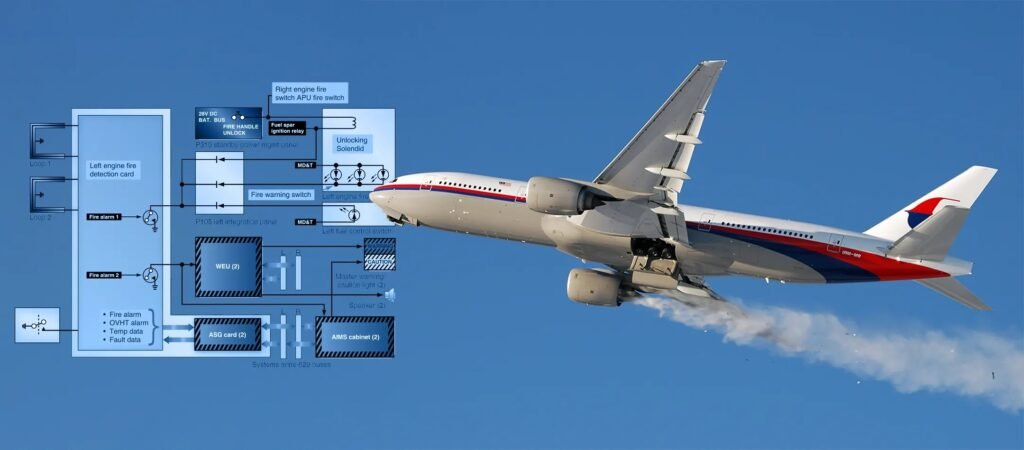
Aviation facilities require carefully coordinated fire protection because they accommodate aircraft, fuel-related activities, passengers, maintenance operations, electrical infrastructure and specialised equipment. Unlike ordinary commercial buildings, airports and aircraft hangars contain different operational environments, each presenting distinct fire and life-safety considerations. Aviation Fire Protection Systems encompass a range of detection, alarm, suppression and firefighting arrangements designed around the hazards and operational requirements of aviation facilities. Their scope can include aircraft hangars, airport terminals, electrical rooms, baggage-handling facilities, maintenance areas and supporting infrastructure.
In Saudi Arabia, aviation fire safety planning must account for applicable Saudi regulations, airport operator requirements, Saudi Civil Defense involvement and relevant international standards where adopted or required by the project.
For building owners, facility managers, airport contractors and engineering consultants, understanding these systems is essential before selecting equipment, preparing project specifications or requesting contractor quotations.
This guide explains the principal system categories, project considerations and compliance factors relevant to aviation fire protection projects in Saudi Arabia.
1. Understanding Aviation Fire Protection Systems
Aviation fire protection is not one individual system. It is a coordinated combination of preventive measures, fire detection, alarm notification, suppression equipment and emergency response arrangements.
The exact configuration depends on the building’s purpose, occupancy, fire hazards, aircraft operations and applicable regulatory requirements.
An airport development may include several separate protection environments:
- Passenger terminals and public circulation areas.
- Aircraft storage and maintenance hangars.
- Airport electrical and control rooms.
- Baggage-handling and logistics facilities.
- Ground-support equipment buildings.
- Maintenance workshops.
- Fuel storage and associated infrastructure.
Each environment requires an appropriate engineering assessment. For example, an electrical control room has different protection considerations from an aircraft maintenance hangar, where aircraft dimensions, maintenance activities and potential fuel-related hazards influence the fire protection strategy.
It is equally important to distinguish building fire protection from Aircraft Rescue and Firefighting (ARFF).
ARFF involves specialist airport emergency response capabilities, including trained personnel, operational procedures, rescue arrangements and dedicated firefighting resources. Building fire suppression and alarm installations are related to aviation safety but do not independently constitute an ARFF service.
2. Fire Risks Across Different Airport Facilities
Airport fire protection planning should begin with identifying the activities and hazards associated with each facility.
Passenger terminals
Passenger terminals contain public spaces, retail areas, offices, baggage systems, electrical installations and building services. Fire protection planning must consider occupant notification, evacuation arrangements, detection coverage, compartmentation and coordination with building management systems.
The presence of large numbers of passengers also makes clear emergency communication and unobstructed evacuation routes essential.
Aircraft hangars
Aircraft hangars can present complex fire hazards associated with aircraft fuel systems, maintenance activities, electrical equipment and combustible materials. Hangar dimensions, aircraft classification, maintenance operations and the possibility of flammable liquid incidents influence the protection strategy.
The design must be evaluated by qualified fire protection engineers against the applicable requirements for the particular hangar.
Electrical and control rooms
Electrical distribution rooms, communication facilities and control centres support airport operations. Equipment-specific fire detection and suppression may be considered where appropriate.
Clean-agent systems, including FM200 and other suitable agents, are among the technologies used in certain enclosed technical environments. Their suitability must be established through engineering assessment rather than assumed for every electrical room.
Baggage handling and logistics facilities
Conveyor systems, electrical motors, stored materials and equipment create different fire protection considerations.
Detection coverage, alarm integration and suppression arrangements must reflect the building configuration and operational requirements.
Ground-support facilities
Maintenance workshops, equipment storage buildings and support facilities require hazard assessments based on their actual activities, stored materials and equipment.
A single airport-wide design assumption should not replace separate assessments of individual buildings and operational zones.
3. Aircraft Hangar Fire Suppression Systems
Aircraft hangar fire protection is a specialist engineering discipline.
Hangars differ considerably in size, construction, aircraft type, maintenance activities and operational use. Consequently, the suppression arrangement must be established through a detailed assessment of the facility.
Key engineering considerations
Hangar classification and geometry
The dimensions, construction characteristics and intended use of the hangar influence its fire protection requirements.
Aircraft maintenance activities
Activities involving fuel systems, hot work, painting and maintenance can affect the fire hazard assessment.
Fuel-related hazards
The potential presence of aviation fuel requires particular attention to fire development, drainage and suppression strategy.
Suppression technology
Different technologies may be considered depending on the hazard, building configuration and applicable requirements.
Integration with building systems
Fire detection, alarms, suppression controls and emergency arrangements must be coordinated as part of the overall facility design.
Foam-based suppression
Foam-based systems are associated with certain flammable-liquid and aircraft hangar fire protection applications.
Their design requires specialist consideration of the hazard, system configuration, discharge characteristics, drainage, environmental implications and applicable project requirements.
The selection of foam technology must also consider current environmental and regulatory restrictions on particular foam formulations.
Water-based protection
Water-based systems may form part of a wider hangar or airport building fire protection strategy where appropriate.
The required arrangement depends on the facility classification, hazard assessment and applicable design criteria.
NFPA 409, Standard on Aircraft Hangars, provides a specific technical reference for aircraft hangar construction and fire protection. The 2026 edition includes revised requirements and reorganised chapters, making edition verification important during project specification.
Important distinction
Aircraft hangar suppression should not be treated as equivalent to installing a standard commercial building fire suppression system.
A qualified engineer must determine the appropriate system architecture and verify the relevant approval requirements.
4. Airport Fire Alarm and Detection Systems
Airport fire alarm systems are important components of an integrated life-safety strategy.
Their purpose is to identify fire conditions, communicate alarms and support appropriate emergency responses.
Common detection categories
Depending on the environment, the design may consider:
- Smoke detection.
- Heat detection.
- Flame detection.
- Aspirating smoke detection.
- Equipment-specific detection.
- Manual fire alarm activation points.
The appropriate detection technology depends on the fire characteristics, airflow, environmental conditions, building height and operational activity.
For example, large-volume hangars may require a different detection approach from enclosed electrical rooms.
Alarm integration
Airport fire alarm systems may need coordination with:
- Building management systems.
- Emergency notification arrangements.
- Access control systems.
- Ventilation and smoke management systems.
- Fire suppression controls.
- Airport operations and emergency management teams.
Integration must be established through approved engineering documentation and project-specific interfaces.
Detection and alarm systems must also be considered in relation to maintenance accessibility, equipment monitoring and operational continuity.
5. Fire Suppression Technologies and System Options
Several fire suppression technologies may be relevant to airport facilities.
The following table provides a general comparison. It is not a design recommendation or confirmation that a particular system is suitable for a specific aviation project.
System categoryTypical applicationKey considerationsWhat to confirm in a quotationWater-based systemsSuitable airport buildings and infrastructureWater supply, hydraulic requirements and building hazardsDesign scope, pump requirements and network coverageFoam-based systemsCertain aircraft hangars and flammable-liquid hazardsHazard classification, discharge strategy and environmental requirementsFoam type, engineering design and authority requirementsFM200 systemsCertain enclosed electrical and technical roomsOccupant safety, enclosure integrity and agent suitabilityProtected volume, agent quantity and system scopeNovec systemsCertain specialised technical environments, subject to product availability and regulatory suitabilityAgent specification, environmental considerations and applicable restrictionsExact agent identity, availability and approved design basisTube detection systemsSuitable enclosed equipment and machineryEquipment configuration and localised hazard characteristicsProtected equipment, detection arrangement and compatibilityFire alarm and detection systemsTerminals, support buildings and technical facilitiesDetection coverage, alarm interfaces and monitoringDevice schedule, zoning and integration responsibilities
FM200 and Novec considerations
FM200 and Novec are product names associated with clean-agent fire suppression technologies.
They should not be treated as interchangeable products or automatically suitable replacements for one another.
The project team should confirm:
- The exact agent specification.
- Whether the product remains available and permitted for the intended application.
- Environmental and regulatory considerations.
- Protected enclosure characteristics.
- Occupant exposure requirements.
- System design and maintenance implications.
Product availability and regulatory restrictions can change. In particular, the term Novec should not be used as a generic description of all clean agents or as an assurance that a specific product is currently available.
Advanced Times Company’s published product range includes FM200 and Novec cylinders and components associated with Tyco, Kidde and Fike.
For general product information, consult the company’s published supply products.
6. Saudi Arabia Regulations and Compliance
Aviation fire safety projects in Saudi Arabia must be evaluated against the requirements applicable to the airport, building, project scope and responsible authorities.
Saudi Civil Defense
The Saudi Civil Defense is an important authority in building fire prevention and protection matters. Project teams should establish applicable requirements and approval responsibilities before beginning design or installation activities.
General Authority of Civil Aviation
The General Authority of Civil Aviation (GACA) publishes aviation regulations and supporting requirements relevant to airport operations and facilities. Its published Fire Prevention Regulations for Facilities, Part One, Third Edition, include instructions concerning implementation of fire prevention requirements in airport projects and buildings.
Airport operators and project stakeholders should verify the current applicable regulatory documents before proceeding.
Airport operator requirements
Airport operators may impose additional technical, operational and project-specific requirements.
For example, Riyadh Airports has published fire prevention project requirements addressing matters such as:
- Project coordination with airport fire prevention representatives.
- Design and drawing reviews.
- Fire alarm system documentation.
- Fire pump requirements.
- Emergency access and evacuation arrangements.
- Coordination before isolating existing firefighting and alarm systems.
These requirements illustrate why airport projects require early engagement with the relevant airport authority.
Relevant technical standards
Depending on the project and its adopted design basis, engineers may need to consider standards and regulations relating to:
- Aircraft hangars.
- Fire alarm and detection.
- Water-based fire protection.
- Fire pumps.
- Fire suppression systems.
- Inspection, testing and maintenance.
NFPA 409 is a relevant reference for aircraft hangars, while other standards may apply to individual systems. Mentioning a standard does not establish that a contractor or installation holds certification or approval under that standard.
All applicable editions and project requirements should be confirmed by qualified engineers and the Authority Having Jurisdiction.
7. Environmental and Operational Considerations
Saudi Arabia’s climate and airport operating conditions can influence fire protection equipment selection and project execution.
Heat and temperature exposure
Riyadh, Jeddah and Dammam experience demanding environmental conditions.
Outdoor equipment, pump installations, control panels and exposed infrastructure may require suitable environmental ratings and engineering consideration.
Dust and airborne particles
Dust can influence detector performance, equipment cleanliness and maintenance requirements.
Detection technologies should be selected according to the operating environment, with suitable inspection and maintenance arrangements.
Coastal conditions in Jeddah and Dammam
Coastal exposure can create corrosion considerations for external equipment, pipework, supports and enclosures.
Material selection and protective measures should be determined according to actual exposure conditions.
Airport operational continuity
Airport construction and maintenance projects must account for operational restrictions.
Contractors may need to coordinate:
- Site access and security arrangements.
- Work permits.
- Restricted-area activities.
- Shutdown windows.
- Temporary impairment of existing fire protection systems.
- Emergency access.
- Testing and handover schedules.
Ramadan and Hajj-season planning
Projects in Saudi Arabia may require additional scheduling coordination around Ramadan and periods of increased travel demand, particularly where airport operations are affected.
The project manager should confirm permitted working windows and access arrangements with the airport operator rather than assume normal construction schedules will apply.
8. Selecting a Fire Protection Contractor
Choosing an aviation fire protection contractor requires more than comparing equipment catalogues.
Building owners, airport operators, consultants and main contractors should assess the proposed scope, engineering documentation and project responsibilities.
Contractor evaluation checklist
Before appointing a contractor, request confirmation of:
- Relevant experience for the specific facility and project scope.
- Proposed system categories and technical specifications.
- Design responsibility and qualified engineering involvement.
- Applicable Saudi regulatory and airport operator requirements.
- Equipment manufacturer and product documentation.
- Fire alarm and suppression integration requirements.
- Installation and coordination responsibilities.
- Inspection, testing and commissioning scope.
- Maintenance and lifecycle support arrangements.
- Documentation and handover requirements.
A contractor’s general fire protection experience should not automatically be treated as proof of aircraft hangar or airport operational experience.
Aviation-specific experience should be independently documented and verified.
What affects project pricing?
Advanced Times Company does not publish standard aviation fire protection prices.
A responsible quotation should be based on the actual project requirements.
The following factors may influence project pricing:
- Facility size and protected area.
- Building height and configuration.
- Hazard classification.
- Required suppression and detection technologies.
- Equipment specifications and quantities.
- Fire pump and water supply requirements.
- Existing infrastructure and integration requirements.
- Project location in Saudi Arabia.
- Airport access and security requirements.
- Engineering, installation and testing scope.
- Project timeline and operational restrictions.
Information to provide when requesting a quotation
For a more accurate commercial assessment, prepare:
- Project location: Riyadh, Jeddah, Dammam or another Saudi location.
- Facility type: hangar, terminal, control room or support building.
- Building drawings and available technical documents.
- Approximate protected area and building height.
- Existing fire protection infrastructure.
- Required service scope.
- Project specifications and authority requirements.
- Desired project timeline.
For general fire suppression and related contracting enquiries, contact Advanced Times Company to discuss the scope and determine whether the company’s published services are appropriate for your requirements.
Phone: +966 50 393 4758
Email: shamshul@advancedtimescompany.com
9. Who Should Reconsider Their Project Scope?
Not every aviation-related fire safety requirement should be handled by a conventional building fire protection contractor.
The following situations require particular care:
Airport operators requiring ARFF services: Dedicated airport rescue and firefighting operations involve specialised vehicles, personnel, emergency procedures and regulatory requirements.
Aircraft hangars with complex fuel hazards: These facilities require specialist engineering assessment and confirmation of the applicable hangar protection requirements.
Airport projects requiring specific operator approvals: Contractors should not begin work without establishing the required design reviews, access permissions and approvals.
Small residential or unrelated commercial projects: These may not require aviation-specific fire protection expertise. Their requirements should be assessed under the appropriate building and fire safety framework.
Where the first requirement is regulatory clarification, consult the relevant authority or qualified fire protection consultant before requesting equipment quotations.
10. Frequently Asked Questions
1. What are Aviation Fire Protection Systems?
They are coordinated fire safety arrangements for aviation facilities, including detection, alarm notification, suppression equipment and firefighting infrastructure. Their configuration depends on the facility type, hazards and applicable regulations.
2. What fire protection systems are required in aircraft hangars?
Requirements depend on the hangar classification, building characteristics, aircraft operations and hazard assessment. Water-based and foam-based systems may be considered where applicable. Qualified engineers must determine the appropriate design and authority requirements.
3. Are airport fire alarm systems different from commercial building fire alarms?
They can involve more complex integration, operational coordination and detection considerations. Airport projects may also have additional airport operator requirements and security-related constraints.
4. Are FM200 and Novec suitable for airport electrical rooms?
They may be considered for certain enclosed technical environments, subject to engineering assessment, product availability, environmental considerations, occupant safety and applicable regulations. Neither should be selected without a qualified design review.
5. Which authorities are relevant to aviation fire protection projects in Saudi Arabia?
Depending on the project, relevant parties may include Saudi Civil Defense, GACA and the airport operator. The applicable authority and approval pathway should be confirmed at the beginning of the project.
6. What information is needed to request an aviation fire protection quotation?
Typically, the contractor needs facility drawings, building dimensions, hazard information, project location, existing system details, proposed scope and relevant technical specifications. Additional information may be required after the initial assessment.
Conclusion
Aviation fire protection systems require careful planning, appropriate technology selection and coordination with the authorities responsible for airport and building safety. Aircraft hangars, airport terminals, electrical rooms and support facilities have different hazards and operational requirements. Their protection strategies should therefore be developed through qualified engineering assessment rather than applying one standard system across every facility.
For Saudi projects, early consideration of Saudi Civil Defense requirements, GACA regulations and airport operator procedures can support more effective project planning.
Advanced Times Company for General Contracting publishes fire suppression system supply and installation, tube detection systems, fire protection products, pumps and related contracting services.
For enquiries about these published services and their suitability for a particular project, contact the company.
Advanced Times Company – Passion to Protect
Phone: +966 50 393 4758
Email: shamshul@advancedtimescompany.com
Website: https://advancedtimescompany.com/