 Skip to content
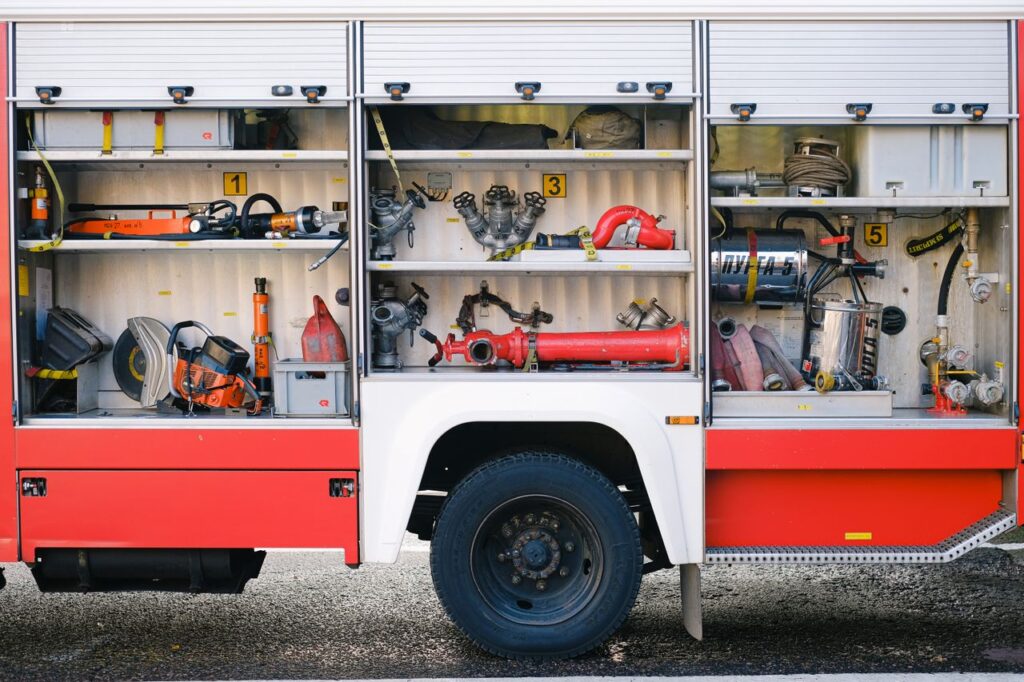
Fire safety is more than a regulatory requirement—it is a critical part of protecting people, property, and business continuity. Whether you manage a commercial office, industrial facility, healthcare center, warehouse, or hospitality property, investing in the right Fire Safety Equipment Saudi Arabia businesses rely on can significantly reduce fire-related risks and improve emergency preparedness.
As Saudi Arabia continues to develop large-scale infrastructure, commercial projects, and industrial facilities under Vision 2030, the demand for reliable fire protection solutions has grown. Modern buildings require more than standalone fire extinguishers; they need integrated systems that detect hazards early, support safe evacuation, and help control fires before they escalate.
Choosing the right fire safety equipment involves understanding your facility’s risks, operational needs, and compliance requirements. It also means working with experienced professionals who can design, install, test, and maintain systems that perform reliably throughout their service life.
At Advanced Times Company (ATC), fire protection is approached as a complete engineering solution. From system design and equipment selection to installation and ongoing maintenance, the goal is to help businesses create safer environments while supporting long-term operational reliability.
This guide explains the essential fire safety equipment used across commercial and industrial buildings in Saudi Arabia, how each system contributes to overall protection, and what factors businesses should consider when planning a comprehensive fire safety strategy.
What Is Fire Safety Equipment Saudi Arabia Businesses Need?
Fire safety equipment includes the devices and systems designed to detect fires, alert occupants, assist evacuation, suppress flames, and support emergency response. While individual products play important roles, they are most effective when integrated into a coordinated fire protection system.
A well-designed fire protection strategy typically combines several components, each serving a specific purpose. Early detection systems identify smoke or heat before a fire spreads, alarm systems notify occupants, suppression systems help control the fire, and emergency equipment supports safe evacuation.
The exact combination of equipment depends on factors such as:
- Building size
- Occupancy type
- Fire hazards
- Operational activities
- Storage materials
- Facility layout
- Risk assessment outcomes
For example, an office building has different fire protection needs than a manufacturing facility or a warehouse storing combustible materials. Understanding these differences helps ensure that the selected equipment is appropriate for the environment and capable of supporting effective emergency response.
The Role of Fire Safety Equipment
Every component of a fire protection system contributes to minimizing the impact of a fire.
Its primary objectives include:
- Detecting fires as early as possible
- Warning occupants quickly
- Supporting safe evacuation
- Limiting fire spread
- Protecting valuable assets
- Assisting emergency responders
- Reducing business interruption
Rather than relying on one solution, modern fire safety depends on multiple systems working together.
Active vs. Passive Fire Protection
Fire protection is generally divided into two categories.
Active Fire Protection
Active systems respond during a fire event.
Examples include:
- Fire Alarm System Saudi Arabia
- Fire Sprinkler System Saudi Arabia
- Fire Fighting Equipment Saudi Arabia
- Smoke detection systems
- Fire suppression systems
- Fire hose reels
- Fire extinguishers
These systems require activation, either automatically or manually, to perform their intended function.
Passive Fire Protection
Passive protection helps contain fire and smoke without requiring activation.
Examples include:
- Fire-resistant walls
- Fire-rated doors
- Fire compartmentation
- Smoke barriers
- Fire-resistant building materials
Together, active and passive systems create a comprehensive fire protection strategy that enhances occupant safety and supports emergency response efforts.
Why Fire Safety Equipment Saudi Arabia Is Essential for Businesses
Fire incidents can result in injuries, property damage, operational downtime, and significant financial losses. Effective fire protection helps reduce these risks while supporting safer working environments.
For businesses across Saudi Arabia, investing in appropriate fire safety equipment is not simply about installing products—it is about building resilience.
Protecting People and Property
The first priority of any fire protection system is protecting lives.
Early detection systems provide occupants with valuable time to evacuate, while suppression systems help control fires before they become unmanageable. Properly selected equipment can also reduce damage to buildings, machinery, inventory, and critical infrastructure.
For facilities operating around the clock, such as hospitals or manufacturing plants, dependable fire protection is particularly important because uninterrupted operations are often essential.
Supporting Compliance
Commercial and industrial facilities are expected to implement fire protection measures that align with applicable regulations, project specifications, and recognized safety standards.
Working with experienced fire protection professionals helps ensure that systems are appropriately designed, installed, tested, and maintained for the intended application. This proactive approach can also simplify inspections and reduce the likelihood of costly corrective work later in the project lifecycle.
Reducing Operational Risks
Fire protection is an investment in business continuity.
Reliable systems help organizations:
- Minimize production downtime
- Reduce equipment damage
- Protect customer confidence
- Support employee safety
- Improve emergency preparedness
- Reduce long-term operational risks
Preventive planning often proves more cost-effective than responding to the consequences of a major fire incident.
Essential Types of Fire Safety Equipment Saudi Arabia Businesses Should Consider
Selecting appropriate equipment begins with understanding the role each system plays. Rather than functioning independently, these systems work together to create multiple layers of protection.
| Equipment | Primary Purpose | Typical Applications | Maintenance Focus |
|---|---|---|---|
| Fire Extinguishers | First-response firefighting | Offices, retail, warehouses | Routine inspections and servicing |
| Fire Alarm Systems | Early warning and occupant notification | All commercial buildings | Functional testing and inspections |
| Fire Sprinkler Systems | Automatic fire suppression | Offices, hotels, industrial facilities | Valve, pipe, and sprinkler inspections |
| Fire Hose Reels | Manual firefighting support | Commercial and industrial buildings | Hose condition and pressure testing |
| Fire Hydrant Systems | External firefighting access | Warehouses, factories, campuses | Flow testing and valve maintenance |
| Smoke Detection Systems | Detect smoke during early fire stages | Offices, hotels, healthcare | Detector testing and cleaning |
| Fire Suppression Systems | Protect high-risk environments | Kitchens, data centers, industrial processes | Agent inspection and system testing |
| Emergency Lighting & Exit Signage | Support safe evacuation | All occupied buildings | Battery testing and periodic inspection |
Fire Extinguishers
Fire extinguishers remain one of the most recognizable and widely used fire protection tools. They provide immediate response capability for small fires before they spread.
Different extinguisher types are designed for different fire classes, making correct selection and placement essential. Employees should also receive appropriate training so they understand when and how extinguishers can be used safely.
Regular inspections help ensure that extinguishers remain fully charged, accessible, and ready for use.
Fire Alarm System Saudi Arabia
A fire alarm system serves as the first line of communication during an emergency.
Modern alarm systems combine detectors, manual call points, control panels, and notification devices to provide rapid warning throughout a facility.
Benefits include:
- Early fire detection
- Faster occupant notification
- Improved evacuation coordination
- Integration with other building safety systems
- Reduced response time
For larger facilities, integrated alarm systems can coordinate with smoke control, emergency lighting, elevators, and other life safety systems to support a more organized emergency response.
Fire Sprinkler System Saudi Arabia
Fire sprinkler systems automatically release water when elevated temperatures activate individual sprinkler heads.
Contrary to common misconceptions, only sprinklers directly exposed to sufficient heat typically activate, helping limit unnecessary water discharge.
Sprinkler systems provide several advantages:
- Rapid fire control
- Reduced fire spread
- Enhanced occupant safety
- Protection of valuable assets
- Lower property damage potential
Because they operate automatically, sprinkler systems are particularly valuable in facilities that may not be continuously occupied.
Fire Hose Reels
A Fire Hose Reel Supplier Saudi Arabia provides equipment designed to support manual firefighting efforts during the early stages of a fire.
Fire hose reels offer a continuous water supply and are commonly installed in:
- Warehouses
- Shopping centers
- Schools
- Commercial buildings
- Industrial facilities
Proper placement ensures that occupants or trained personnel can quickly access water before emergency responders arrive.
Routine inspections verify hose integrity, pressure performance, and operational readiness.
Fire Hydrant Systems
Fire hydrant systems provide firefighters with a dependable external water supply during larger fire emergencies.
They are particularly important for:
- Industrial complexes
- Manufacturing plants
- Logistics facilities
- Large commercial developments
- Distribution centers
Hydrants form an essential part of site-wide fire protection planning, especially where rapid access to water is critical.
Periodic testing helps confirm that hydrants deliver the required water flow and remain operational when needed.
Smoke Detection Systems
Smoke detection systems are designed to identify smoke at the earliest possible stage of a fire, often before flames become visible.
Early detection offers valuable time for:
- Occupant evacuation
- Emergency notification
- Fire department response
- Activation of other integrated safety systems
Different detector technologies are suited to different environments, making professional system design an important part of overall fire protection planning.
Fire Suppression Systems
While sprinkler systems primarily use water, some environments require specialized suppression methods.
A Fire Protection System Saudi Arabia may incorporate suppression systems that use clean agents, foam, or other extinguishing media depending on the protected assets.
These systems are commonly used in:
- Data centers
- Server rooms
- Commercial kitchens
- Electrical rooms
- Industrial processing areas
- High-value equipment spaces
Selecting the appropriate suppression technology depends on the specific fire risks and the sensitivity of the equipment being protected.
Emergency Lighting and Exit Signage
During a fire or power outage, occupants must be able to evacuate quickly and safely.
Emergency lighting and illuminated exit signage help maintain visibility along escape routes, reducing confusion and supporting orderly evacuation.
These systems are particularly important in facilities with high occupancy levels, including offices, hotels, healthcare facilities, educational institutions, and shopping centers.
Routine testing ensures that backup power systems operate correctly when normal electrical supplies are interrupted.
Choosing the Right Fire Safety Equipment Saudi Arabia for Your Facility
No two buildings face exactly the same fire risks. A solution that works well for a commercial office may not provide adequate protection for a manufacturing plant or logistics warehouse. Selecting the right equipment starts with understanding how the building is used, the hazards present, and the level of protection required.
A professional fire risk assessment helps identify potential ignition sources, combustible materials, occupancy levels, and operational processes. These factors influence the design of an effective Fire Protection System Saudi Arabia businesses can depend on for long-term safety.
Assess Your Building Type
Different facilities require different combinations of fire protection systems.
- Office Buildings: Fire alarm systems, smoke detectors, fire extinguishers, emergency lighting, and sprinkler systems are commonly used to protect employees and visitors.
- Warehouses: Facilities storing large volumes of goods often benefit from hydrant systems, sprinkler networks, fire hose reels, and strategically placed extinguishers.
- Manufacturing Facilities: Production environments may require specialized suppression systems, heat detection, and protection for machinery or hazardous processes.
- Hotels and Hospitality: Guest safety depends on integrated alarm systems, emergency exits, sprinklers, and clear evacuation routes.
- Healthcare Facilities: Hospitals and clinics require dependable detection, suppression, compartmentation, and emergency communication systems that support patient safety during an incident.
Matching equipment to the building’s function helps create a balanced and effective fire protection strategy.
Evaluate Fire Risks
Every facility presents unique hazards. Consider factors such as:
- Electrical installations
- Flammable liquids or gases
- High-value equipment
- Storage configuration
- Occupancy levels
- Operating hours
- Production activities
Understanding these risks ensures that fire protection measures are proportionate to the environment rather than relying on a one-size-fits-all approach.
Plan for Future Growth
Businesses evolve over time. New production lines, office expansions, additional storage areas, or changes in occupancy can affect fire protection requirements.
Planning systems with future expansion in mind can reduce the need for extensive modifications later and help maintain consistent protection as operations grow.
Think Beyond Installation
Installing equipment is only the beginning. Long-term performance depends on regular inspections, preventive maintenance, testing, and timely replacement of worn or outdated components.
Choosing equipment that is easy to maintain—and working with a provider that offers ongoing support—helps ensure systems remain dependable throughout their operational life.
The Importance of Professional Design, Installation, and Maintenance
Even the highest-quality equipment cannot perform as intended if it is poorly designed, incorrectly installed, or inadequately maintained.
An engineering-led approach considers the building as a complete system, ensuring that fire detection, alarm, suppression, and evacuation measures work together seamlessly.
Why System Integration Matters
Modern buildings rely on multiple safety systems operating in coordination.
For example, when smoke is detected:
- The fire alarm activates.
- Occupants receive evacuation alerts.
- Emergency lighting illuminates escape routes.
- Smoke control systems may activate.
- Fire suppression systems respond where appropriate.
- Emergency responders receive critical information more quickly.
This coordinated response improves both life safety and property protection.
Routine Inspection and Testing
Regular inspections verify that equipment remains operational and ready for emergencies.
A maintenance program typically includes:
- Visual inspections
- Functional testing
- Battery checks
- Pressure testing
- Detector calibration
- Control panel verification
- Documentation of inspection results
Preventive maintenance helps identify issues before they affect system performance and can reduce unexpected downtime.
Supporting Long-Term Reliability
Fire protection systems represent a long-term investment. Routine servicing helps extend equipment life, maintain operational readiness, and reduce the likelihood of unexpected failures.
For commercial and industrial facilities, consistent maintenance also supports business continuity by minimizing disruptions caused by equipment faults or emergency repairs.
Common Mistakes to Avoid When Selecting Fire Safety Equipment
Choosing fire protection solutions involves more than comparing products. Avoiding common mistakes can improve safety, reduce costs over time, and simplify future maintenance.
Choosing Based Only on Price
Lower upfront costs do not always deliver the best long-term value. Reliability, durability, service support, and compatibility with the overall fire protection strategy should all be considered during the decision-making process.
Treating Equipment as Standalone Products
Fire safety equipment performs best when designed as part of an integrated system. Purchasing individual products without considering how they work together can create gaps in protection.
Ignoring Maintenance Requirements
Every fire protection system requires periodic inspection and servicing. Failing to plan for maintenance may reduce system effectiveness over time.
Using Generic Solutions
Each facility has different hazards and operational requirements. Customized system design helps ensure that protection measures reflect the building’s specific risks.
Delaying System Upgrades
Buildings change over time. Renovations, occupancy increases, or operational changes may require updates to existing fire protection systems to maintain effective coverage.
Working with Inexperienced Contractors
Fire protection projects involve careful planning, technical expertise, and coordination across multiple disciplines. Working with experienced professionals helps ensure systems are designed, installed, and maintained to a high standard.
Why Work with an Experienced Fire Safety Company Saudi Arabia
Selecting the right fire protection partner is just as important as selecting the right equipment.
An experienced provider brings together engineering expertise, product knowledge, project management, and ongoing technical support to deliver solutions tailored to each facility’s needs.
Advanced Times Company (ATC) approaches fire protection as a complete lifecycle service rather than simply supplying equipment. The company’s capabilities include:
- Fire protection system design
- Equipment selection
- Supply and installation
- Testing and commissioning
- Preventive maintenance
- System upgrades
- Technical consultation
- Support for regulatory compliance requirements
This integrated approach helps clients develop fire protection strategies that are practical, reliable, and aligned with their operational objectives.
Whether supporting a new construction project or upgrading an existing facility, working with a knowledgeable fire protection partner can simplify project delivery and provide confidence that systems are designed for long-term performance.
Conclusion
Choosing the right Fire Safety Equipment Saudi Arabia businesses rely on is an important investment in people, property, and operational resilience. Effective fire protection is not achieved through a single product but through a carefully planned combination of detection, alarm, suppression, evacuation, and maintenance strategies.
Every facility has unique risks, making professional assessment and system design essential. By selecting equipment that matches the building’s operational requirements and maintaining those systems throughout their lifecycle, organizations can strengthen safety, improve emergency preparedness, and support uninterrupted business operations.
As an engineering-led fire protection provider, Advanced Times Company delivers integrated solutions that include system design, supply, installation, testing, commissioning, and maintenance. This comprehensive approach helps commercial and industrial clients implement reliable fire protection systems tailored to their specific requirements.
If your organization is planning a new project, expanding an existing facility, or reviewing its current fire protection measures, consulting with experienced specialists is an important first step toward creating a safer and more resilient environment.
Frequently Asked Questions (FAQs)
1. What fire safety equipment is commonly used in commercial buildings in Saudi Arabia?
Most commercial buildings use a combination of fire extinguishers, fire alarm systems, smoke detectors, sprinkler systems, fire hose reels, emergency lighting, exit signage, and, where appropriate, fire hydrant or suppression systems. The exact combination depends on the building’s size, occupancy, and risk profile.
2. How often should fire safety equipment be inspected?
Inspection and maintenance schedules vary depending on the type of equipment and applicable standards. Routine inspections, functional testing, and preventive maintenance help ensure systems remain operational and ready for emergencies.
3. What is the difference between a fire alarm system and a fire suppression system?
A fire alarm system detects fire-related conditions and alerts occupants to evacuate, while a fire suppression system is designed to control or extinguish a fire using water or other extinguishing agents. Both systems play complementary roles in a comprehensive fire protection strategy.
4. How do I choose the right fire safety equipment supplier in Saudi Arabia?
Look for a provider with experience in system design, product supply, installation, testing, and ongoing maintenance. An engineering-led company that offers integrated fire protection solutions can help ensure equipment is appropriate for your facility and supported throughout its lifecycle.
5. Why is preventive maintenance important for fire protection systems?
Preventive maintenance helps identify potential issues before they affect system performance. Regular inspections, testing, and servicing improve reliability, extend equipment life, and help ensure systems remain ready to respond during an emergency.
6. Can fire protection systems be customized for different industries?
Yes. Fire protection systems should be designed around the specific risks of each facility. Offices, warehouses, manufacturing plants, hotels, healthcare facilities, and educational institutions often require different combinations of detection, suppression, and emergency response systems to achieve effective protection.